


When I say this Brown Sugar Glazed Christmas Ham is sweet and sticky and perfectly juicy I mean it! You would never guess something this impressive could be so easy to make at home. Coated in a rich brown sugar glaze and warmed slowly in the oven until beautifully caramelized this Christmas ham comes out with a gorgeous golden exterior and tender meat that practically melts in your mouth.
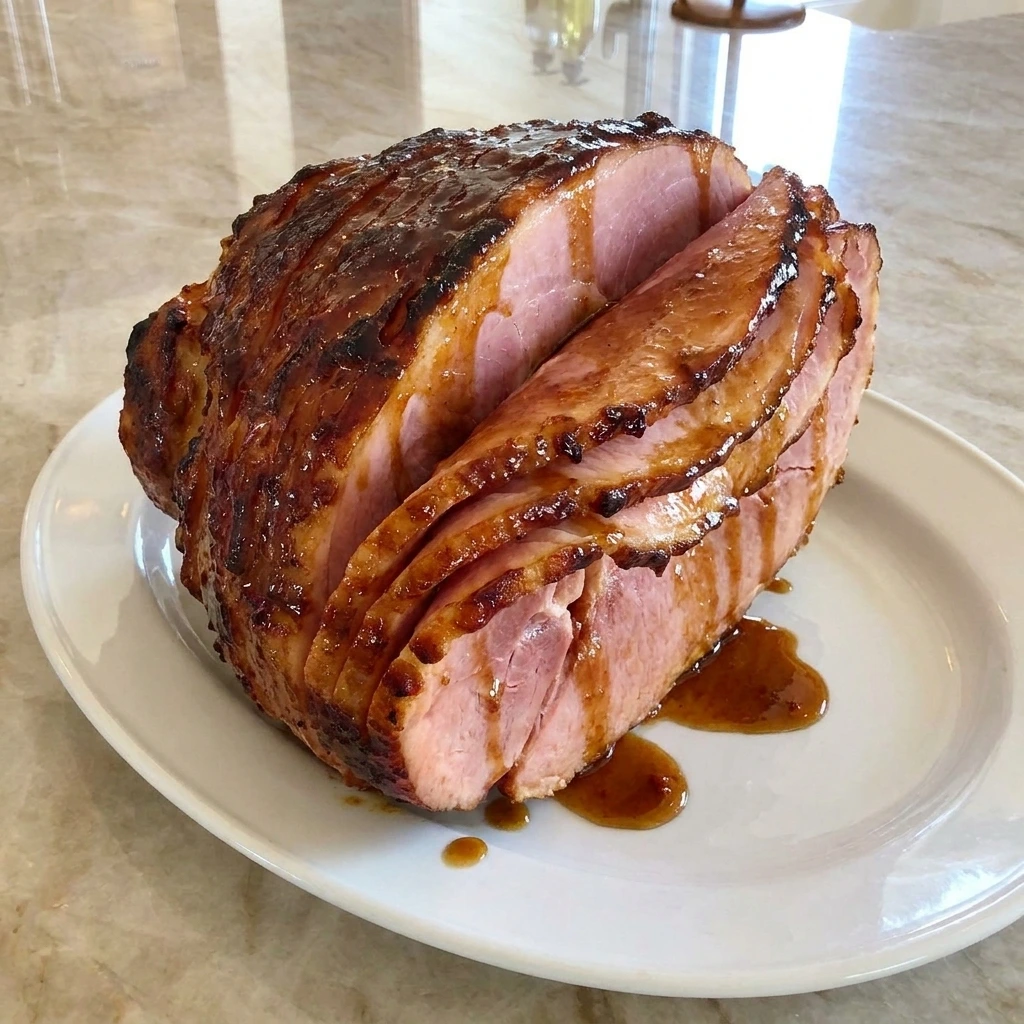
Do not get me wrong because I love a traditional holiday roast but making Brown Sugar Glazed Christmas Ham in the oven creates ridiculously flavorful and juicy meat with an incredibly glossy finish. The combination of brown sugar and honey and Dijon mustard gives every slice that perfect balance of sweetness and savory flavor. If you are planning a beautiful Christmas dinner then our Blackberry Brie and Honey Crostini makes a wonderful appetizer to serve before the main course.
This Brown Sugar Glazed Christmas Ham really defies all expectations because it tastes like something you would order for an expensive holiday celebration but it is surprisingly simple to prepare. The sticky glaze settles into the little cuts and caramelizes around the edges while the inside stays wonderfully moist. I am not exaggerating when I say this is REAL GOOD.
Ingredients
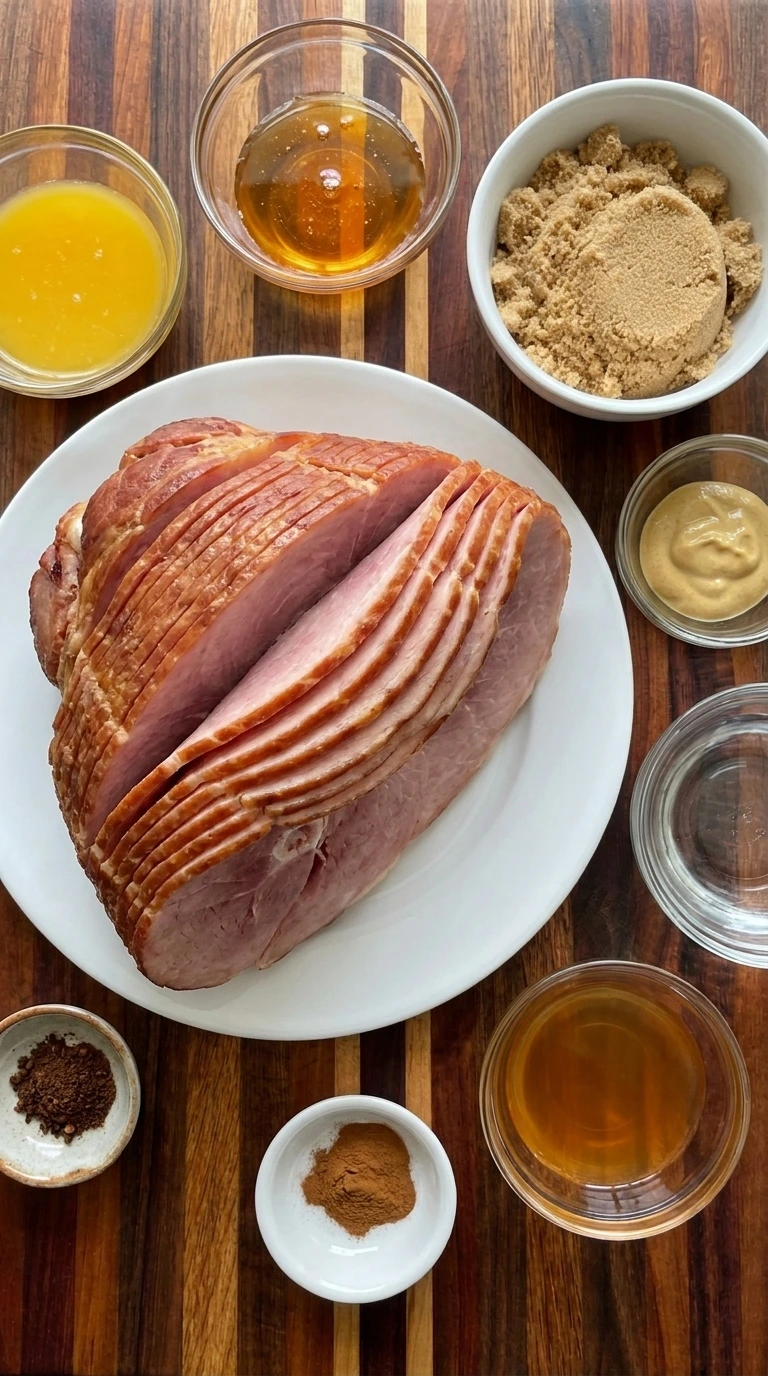
Here is what I use for this recipe :
- Fully cooked bone-in spiral-sliced ham: Provides the savory centerpiece of the recipe while the bone helps maintain flavor and the spiral cuts allow the sweet glaze to settle between the tender slices.
- Light brown sugar: Creates the signature sweet glaze and develops a deep amber color as it dissolves and gently caramelizes on the ham.
- Honey: Adds natural sweetness and helps the glaze cling to the ham while creating a shiny and slightly sticky finish.
- Dijon mustard: Balances the sweetness with a mild tangy flavor and adds depth to the glaze without overpowering the ham.
- Apple cider vinegar: Introduces gentle acidity that cuts through the richness of the ham and keeps the brown sugar glaze from tasting overly sweet.
- Orange juice: Adds a subtle citrus flavor and provides liquid to dissolve the brown sugar into a smooth glaze.
- Ground cinnamon: Contributes warm holiday spice and complements the honey and brown sugar without dominating the savory flavor.
- Ground cloves: Adds a concentrated traditional holiday aroma and brings a subtle spiced note to the finished glaze.
- Water: Creates gentle moisture in the roasting pan during reheating and helps prevent the ham drippings from scorching.
Tools I Use :
- Large roasting pan: Holds the 8-pound ham securely while catching natural juices and glaze during the oven reheating and caramelization stages.
- Small saucepan: Allows the brown sugar and honey and other glaze ingredients to dissolve and thicken gently over controlled heat.
- Silicone pastry brush: Spreads the thick brown sugar glaze over the ham and helps distribute it between the spiral slices without tearing the meat.
- Aluminum foil: Covers the roasting pan during the initial warming stage to retain moisture and protect the ham from drying.
- Measuring cups and spoons: Measure the glaze ingredients accurately so the sweetness and acidity and spices remain properly balanced.
- Heat-resistant spoon: Combines the glaze ingredients during simmering and helps distribute the thick sauce evenly.
- Instant-read meat thermometer: Checks the internal temperature of the ham without relying only on its exterior appearance.
- Carving knife: Separates the spiral slices from the bone and helps portion the warmed ham neatly for serving.
- Large serving platter: Supports the finished Christmas ham during resting and presentation before individual portions are plated.
- White dinner plates: Hold individual servings of glazed ham while showing the contrast between the pink interior and caramelized exterior.
Instructions
Step 1: Simmer the brown sugar glaze until glossy
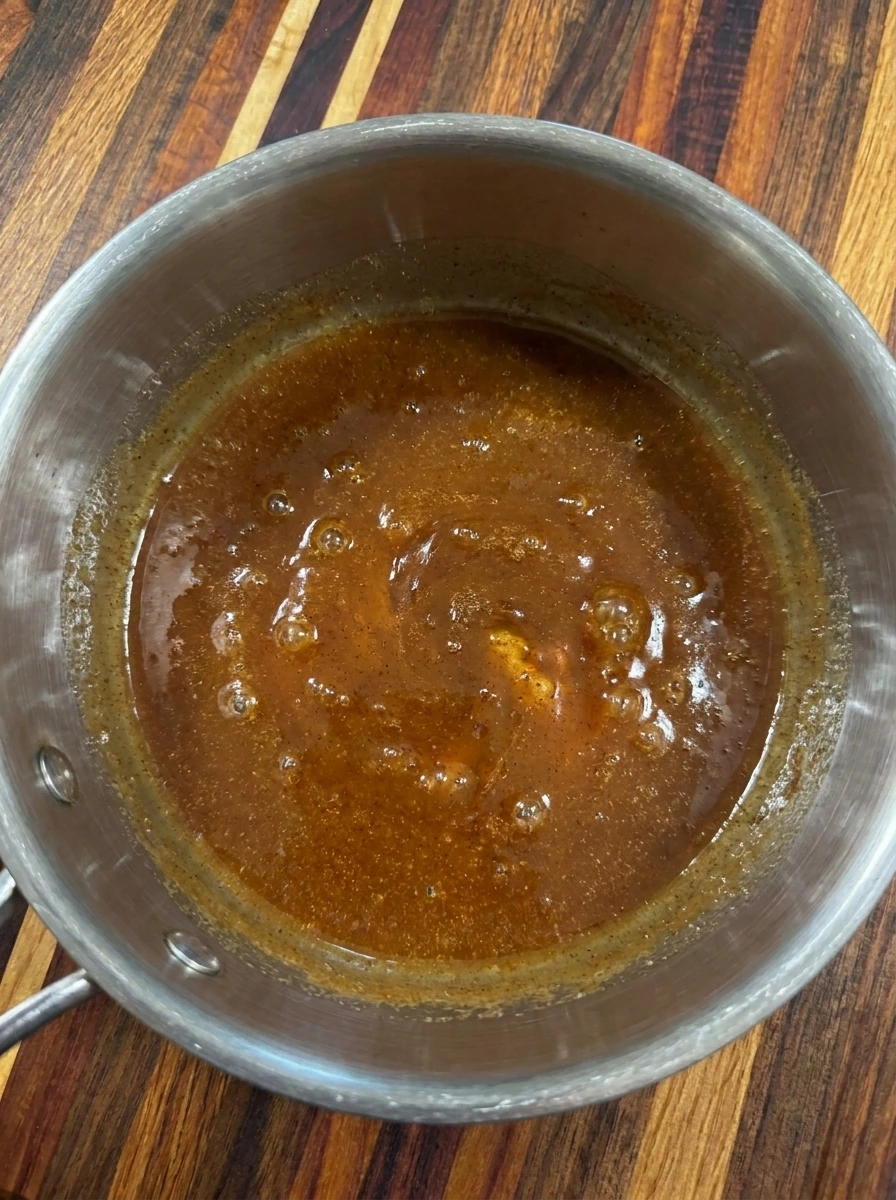
Add the packed brown sugar and honey and Dijon mustard to a small saucepan. Pour in the orange juice and apple cider vinegar before adding the cinnamon and ground cloves. Stir everything together until the brown sugar begins to dissolve and the ingredients form a smooth mixture. Set the saucepan over medium-low heat and allow the glaze to reach a gentle simmer. Stir occasionally for about 3 to 5 minutes until the mixture becomes glossy and slightly thicker. The glaze should still pour easily because it will thicken further as it cools and caramelizes on the ham.
Tip: Keep the glaze at a gentle simmer rather than a rolling boil because overheating can make the sugar too thick before it reaches the ham.
Step 2: Arrange and open the spiral-cut ham
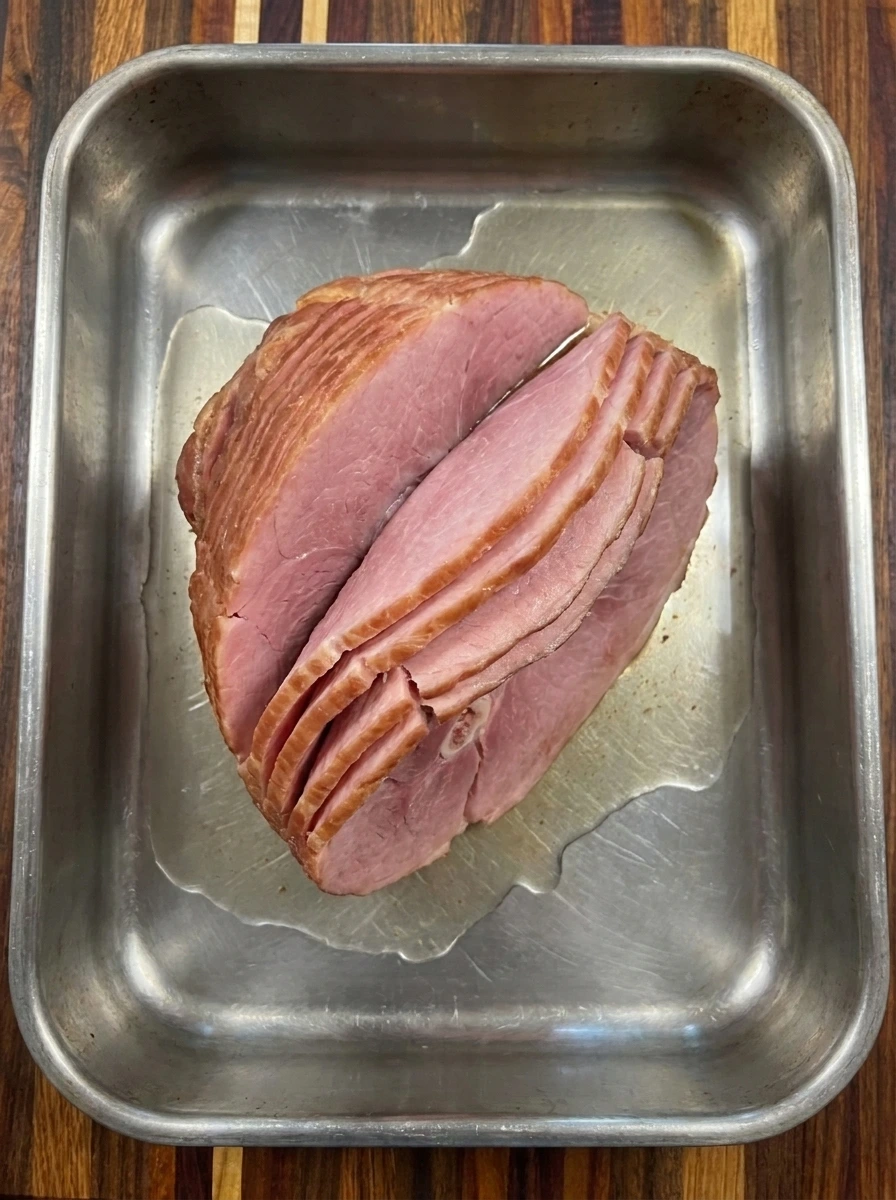
Preheat the oven to 325°F and remove any packaging and plastic bone guard from the fully cooked ham. Place the ham cut side down in a large roasting pan and gently separate a few spiral slices near the top and sides without pulling them completely apart. This creates small openings where the glaze can settle. Pour the water into the bottom of the roasting pan so it surrounds the ham without washing over the meat. Keep the slices connected to the bone and maintain the natural rounded shape of the ham so it warms evenly.
Tip: Avoid pulling the spiral slices too far apart because loosely connected slices can dry out during the reheating process.
Step 3: Warm the ham gently in the oven
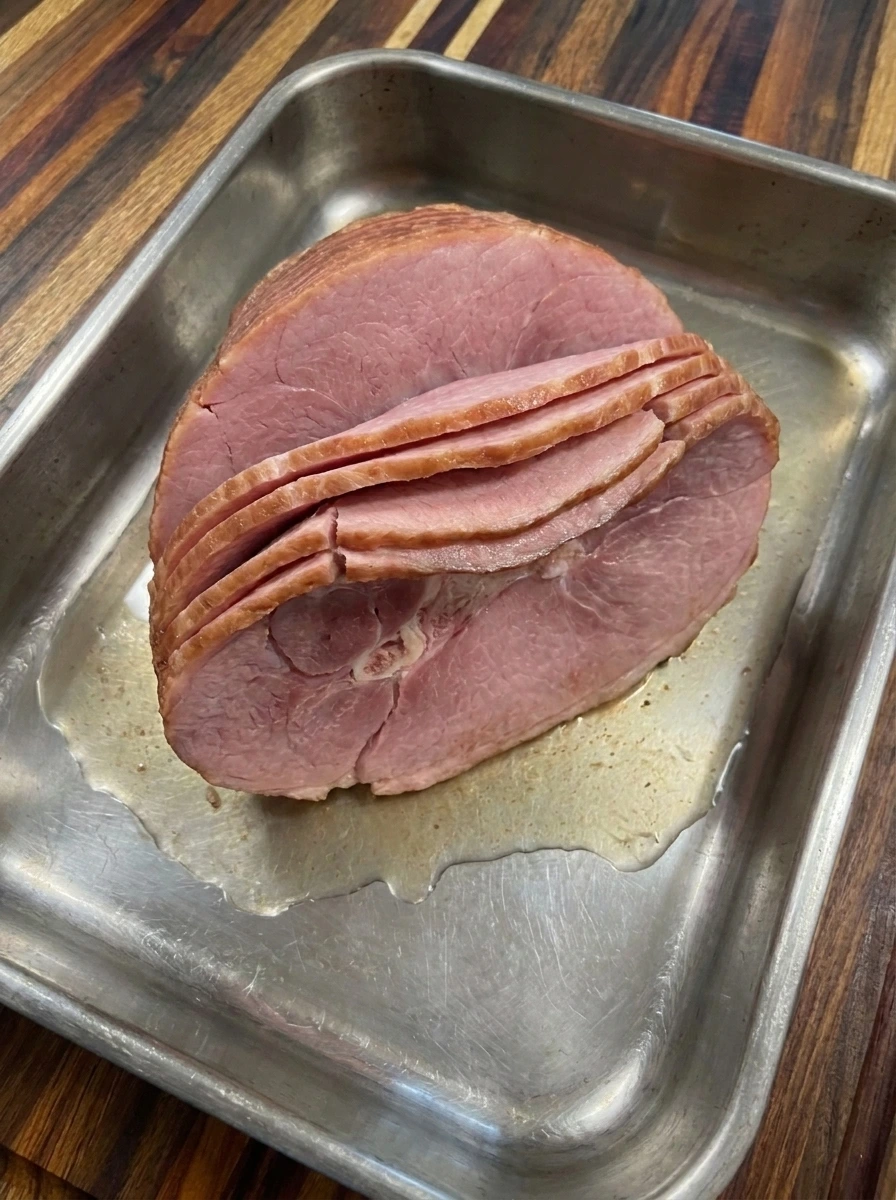
Cover the roasting pan tightly with aluminum foil and place it in the preheated oven. Warm the fully cooked ham for approximately 60 to 90 minutes before beginning the glazing stage. The foil helps retain moisture while the gentle oven heat warms the meat without aggressively browning the exterior. When you remove the foil the ham should look warmer and slightly more relaxed around the spiral cuts. Some natural juices will have collected at the bottom of the pan and the outer slices may have shifted apart slightly. Follow the package reheating guidance and allow enough time for the final glazing stage.
Tip: Use gentle oven heat and keep the roasting pan covered during the first stage so the spiral slices remain tender and juicy.
Step 4: Brush the warm ham with brown sugar glaze
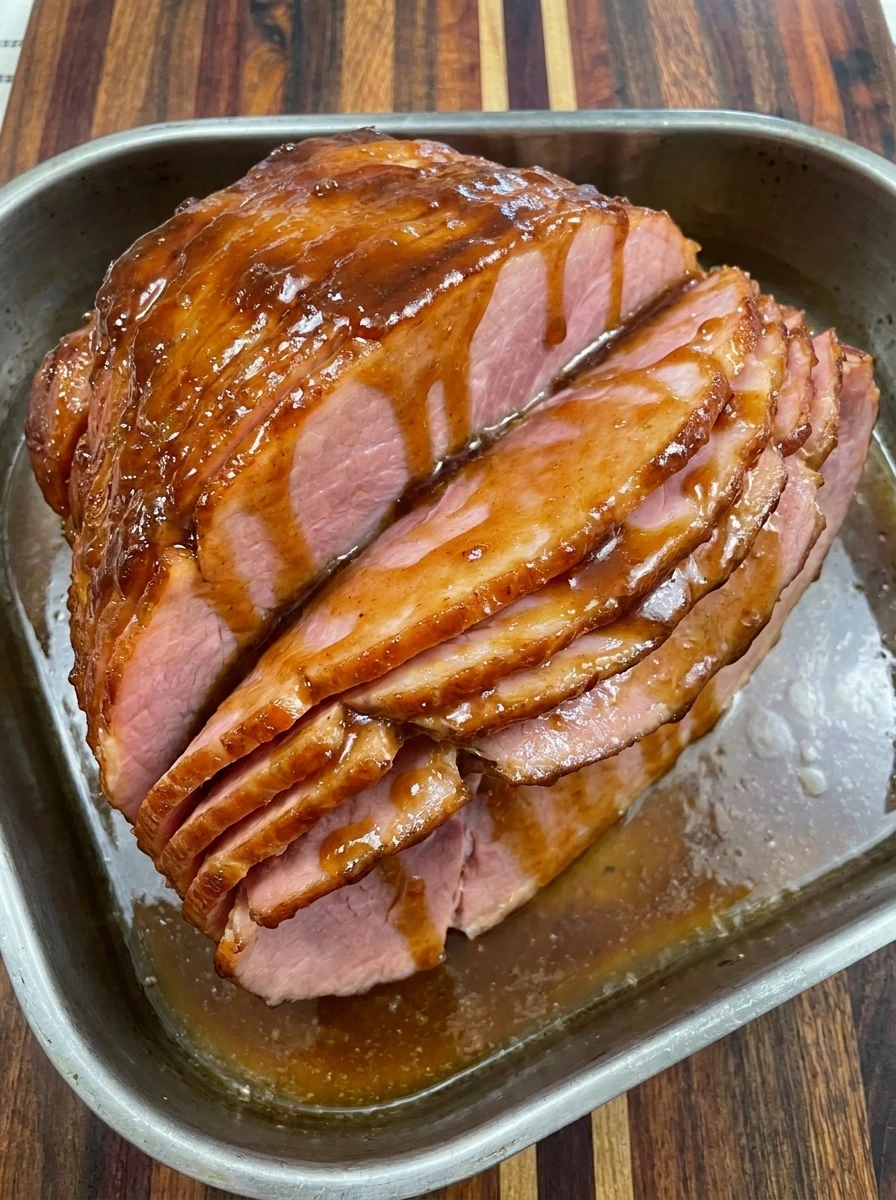
Remove the roasting pan from the oven and carefully uncover the ham. Brush approximately two-thirds of the prepared glaze across the rounded exterior and into the openings between the spiral slices. Allow the thick amber mixture to settle naturally into the uneven cuts rather than coating only the surface. Rotate the roasting pan slightly while spreading the glaze so the exposed sides receive generous coverage. The ham will immediately become glossy and its pale golden exterior will develop a richer amber appearance. Reserve the remaining glaze for the final baking stage.
Tip: Work some glaze between the spiral cuts so the sweetness reaches the inner slices while leaving the ham connected and intact.
Step 5: Bake until the glaze caramelizes
Return the uncovered ham to the oven and continue baking for approximately 20 to 30 minutes. During the final 10 minutes brush the reserved glaze over the top and along the exposed spiral cuts. The sugars will begin to bubble and form a sticky caramelized coating with deeper golden patches around the edges. Check the internal temperature in the thickest section without touching the bone. For a fully cooked ham packaged in a USDA-inspected plant reheat to 140°F or follow the package directions. Other fully cooked hams may require reheating to 165°F. If the glaze darkens too quickly cover the ham loosely with foil. Let the finished ham rest for approximately 15 minutes before serving.
Tip: Watch the glaze closely near the end because the honey and brown sugar can darken quickly once the ham is uncovered.
Step 6: Serve juicy glazed ham slices
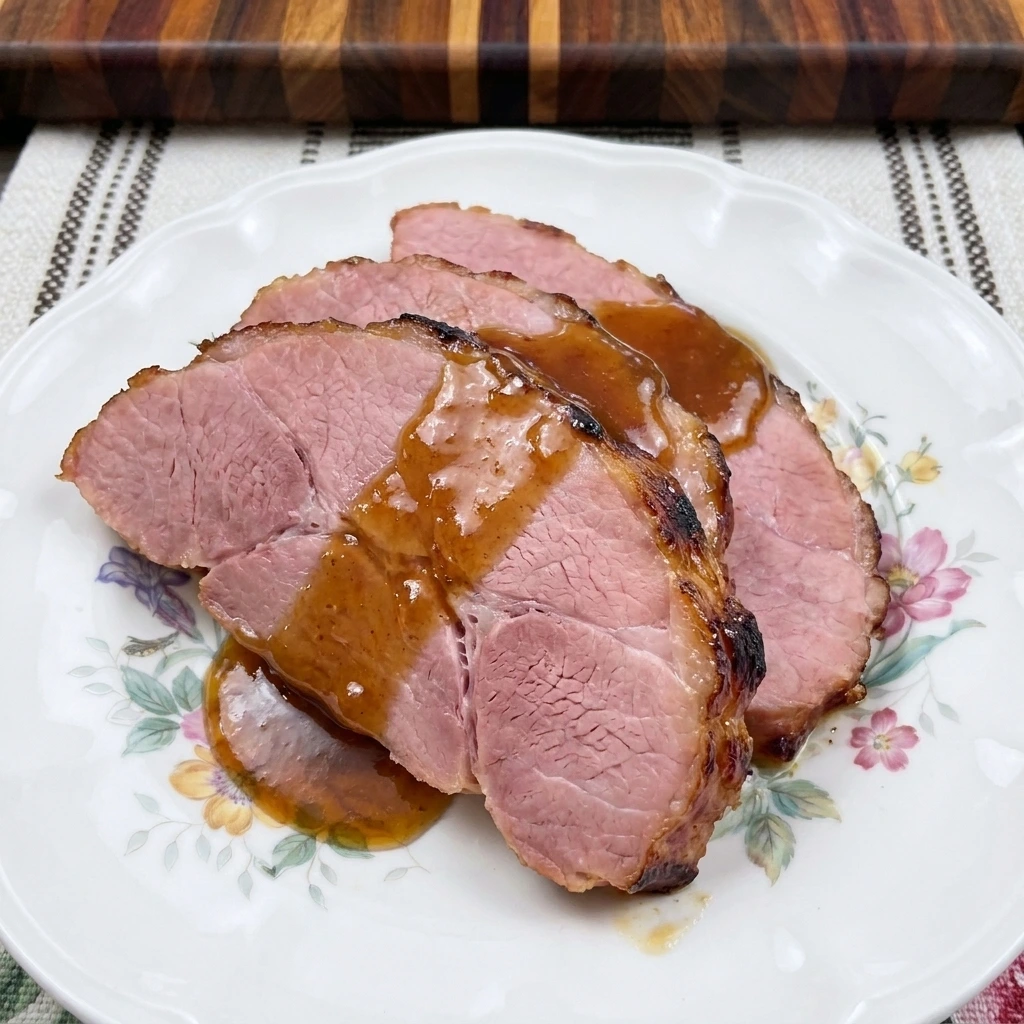
Transfer the rested ham to a serving platter and carefully lift several spiral slices away from the bone. Place one generous serving of approximately 6 ounces on a white dinner plate. Arrange the slices with their juicy pink interiors visible and their caramelized brown sugar edges facing upward. Spoon a little of the warm glaze over the sliced meat and allow it to settle naturally between the uneven layers. Serve while warm so the glaze remains glossy and the meat stays tender. The finished serving should have a mixture of lightly caramelized edges and moist pink interiors.
Tip: Serve the ham in loosely overlapping slices rather than a tight stack so the juicy interior and caramelized edges stay visible.
Pro Tips
- Choose a fully cooked bone-in spiral ham for convenient serving and rich flavor while keeping the slices connected during reheating.
- Warm the ham covered before adding the glaze so the brown sugar does not burn during the longer heating stage.
- Brush the glaze between the spiral cuts and across the rounded surface for sweet flavor throughout each serving.
- Allow the ham to rest for about 15 minutes before separating the slices so the meat stays juicy and the glaze settles.
Storage Instructions
Refrigerator Storage: Allow the leftover Brown Sugar Glazed Christmas Ham to cool slightly before transferring it to shallow airtight containers. Refrigerate within 2 hours of cooking and keep the ham at 40°F or below. Use refrigerated leftovers within 3 to 4 days for the best quality and food safety. Freezer Storage: Separate the leftover ham into convenient meal-sized portions and wrap each portion tightly before placing it inside a freezer-safe container or bag. Add a little leftover glaze to help protect the sliced meat from drying.
Freeze promptly and use within 1 to 2 months for the best flavor and texture. Reheating Instructions: Place refrigerated ham slices inside a covered baking dish with a small splash of water or reserved glaze. Warm gently in a 325°F oven until heated through. Previously cooked leftovers should reach 165°F when reheated and the slices should remain covered to preserve moisture. Make-Ahead Instructions: Prepare the brown sugar glaze up to 24 hours in advance and store it in a sealed container in the refrigerator. Warm the glaze gently before spreading it over the ham. You can also arrange the fully cooked ham in its roasting pan ahead of time and keep it covered in the refrigerator until ready to heat.
Frequently Asked Questions
Yes you can prepare the glaze one day ahead and refrigerate it before warming gently and brushing it over the ham.
Keep the ham covered during the initial reheating stage and use a thermometer to avoid overheating the meat.
Yes a fully cooked boneless ham works well but heating times will vary so follow its package instructions.
Store cooked ham in an airtight container for 3 to 4 days and reheat portions gently before serving.
See You in the Kitchen
I hope you enjoy all the recipes I share with you including this delicious Brown Sugar Glazed Christmas Ham recipe and our festive Sugared Cranberries and No-Bake Christmas Mini Cheesecakes.
I hope you try it and enjoy it and rate it and share it with your friends and family!
Print
Brown Sugar Glazed Christmas Ham
- Total Time: 2 hours 30 minutes
- Yield: 16 servings
Description
This Brown Sugar Glazed Christmas Ham is an easy holiday centerpiece with tender juicy meat and a rich sticky glaze made with brown sugar and honey and Dijon mustard. It is one of the best Christmas dinner ideas when you want something special without complicated preparation. The simple glaze comes together quickly and creates a beautiful golden finish as the ham warms in the oven. Serve this family favorite for a holiday party or enjoy leftovers for quick meal prep.
Ingredients
- 1 ham weighing about 8 pounds Fully cooked bone-in spiral-sliced ham
- 1 cup packed Light brown sugar
- 1/3 cup Honey
- 2 tablespoons Dijon mustard
- 2 tablespoons Apple cider vinegar
- 1/4 cup Orange juice
- 1/2 teaspoon Ground cinnamon
- 1/4 teaspoon Ground cloves
- 1/2 cup Water
Instructions
- Add the packed brown sugar and honey and Dijon mustard to a small saucepan. Pour in the orange juice and apple cider vinegar before adding the cinnamon and ground cloves. Stir everything together until the brown sugar begins to dissolve and the ingredients form a smooth mixture.
Set the saucepan over medium-low heat and allow the glaze to reach a gentle simmer. Stir occasionally for about 3 to 5 minutes until the mixture becomes glossy and slightly thicker. The glaze should still pour easily because it will thicken further as it cools and caramelizes on the ham.
- Preheat the oven to 325°F and remove any packaging and plastic bone guard from the fully cooked ham. Place the ham cut side down in a large roasting pan and gently separate a few spiral slices near the top and sides without pulling them completely apart. This creates small openings where the glaze can settle.
Pour the water into the bottom of the roasting pan so it surrounds the ham without washing over the meat. Keep the slices connected to the bone and maintain the natural rounded shape of the ham so it warms evenly.
- Cover the roasting pan tightly with aluminum foil and place it in the preheated oven. Warm the fully cooked ham for approximately 60 to 90 minutes before beginning the glazing stage. The foil helps retain moisture while the gentle oven heat warms the meat without aggressively browning the exterior.
When you remove the foil the ham should look warmer and slightly more relaxed around the spiral cuts. Some natural juices will have collected at the bottom of the pan and the outer slices may have shifted apart slightly. Follow the package reheating guidance and allow enough time for the final glazing stage.
- Remove the roasting pan from the oven and carefully uncover the ham. Brush approximately two-thirds of the prepared glaze across the rounded exterior and into the openings between the spiral slices. Allow the thick amber mixture to settle naturally into the uneven cuts rather than coating only the surface.
Rotate the roasting pan slightly while spreading the glaze so the exposed sides receive generous coverage. The ham will immediately become glossy and its pale golden exterior will develop a richer amber appearance. Reserve the remaining glaze for the final baking stage.
- Return the uncovered ham to the oven and continue baking for approximately 20 to 30 minutes. During the final 10 minutes brush the reserved glaze over the top and along the exposed spiral cuts. The sugars will begin to bubble and form a sticky caramelized coating with deeper golden patches around the edges.
Check the internal temperature in the thickest section without touching the bone. For a fully cooked ham packaged in a USDA-inspected plant reheat to 140°F or follow the package directions. Other fully cooked hams may require reheating to 165°F. If the glaze darkens too quickly cover the ham loosely with foil. Let the finished ham rest for approximately 15 minutes before serving.
- Transfer the rested ham to a serving platter and carefully lift several spiral slices away from the bone. Place one generous serving of approximately 6 ounces on a white dinner plate. Arrange the slices with their juicy pink interiors visible and their caramelized brown sugar edges facing upward.
Spoon a little of the warm glaze over the sliced meat and allow it to settle naturally between the uneven layers. Serve while warm so the glaze remains glossy and the meat stays tender. The finished serving should have a mixture of lightly caramelized edges and moist pink interiors.
Notes
Pro Tips:
- Choose a fully cooked bone-in spiral ham for convenient serving and rich flavor while keeping the slices connected during reheating.
- Warm the ham covered before adding the glaze so the brown sugar does not burn during the longer heating stage.
- Brush the glaze between the spiral cuts and across the rounded surface for sweet flavor throughout each serving.
- Allow the ham to rest for about 15 minutes before separating the slices so the meat stays juicy and the glaze settles.
Storage: Refrigerator Storage: Allow the leftover Brown Sugar Glazed Christmas Ham to cool slightly before transferring it to shallow airtight containers. Refrigerate within 2 hours of cooking and keep the ham at 40°F or below. Use refrigerated leftovers within 3 to 4 days for the best quality and food safety.
Freezer Storage: Separate the leftover ham into convenient meal-sized portions and wrap each portion tightly before placing it inside a freezer-safe container or bag. Add a little leftover glaze to help protect the sliced meat from drying. Freeze promptly and use within 1 to 2 months for the best flavor and texture.
Reheating Instructions: Place refrigerated ham slices inside a covered baking dish with a small splash of water or reserved glaze. Warm gently in a 325°F oven until heated through. Previously cooked leftovers should reach 165°F when reheated and the slices should remain covered to preserve moisture.
Make-Ahead Instructions: Prepare the brown sugar glaze up to 24 hours in advance and store it in a sealed container in the refrigerator. Warm the glaze gently before spreading it over the ham. You can also arrange the fully cooked ham in its roasting pan ahead of time and keep it covered in the refrigerator until ready to heat.
- Prep Time: 15 minutes
- Cook Time: 2 hours
- Category: Dinner
- Cuisine: American