

Seriously no joke this is the best pumpkin sourdough bread recipe. It is the one I make when fall arrives and the kitchen starts craving something warm and homemade. It is a classic loaf with simple delicious ingredients. Tangy sourdough is mixed with pumpkin puree and maple syrup and cinnamon for a tender orange crumb with a crisp rustic crust.
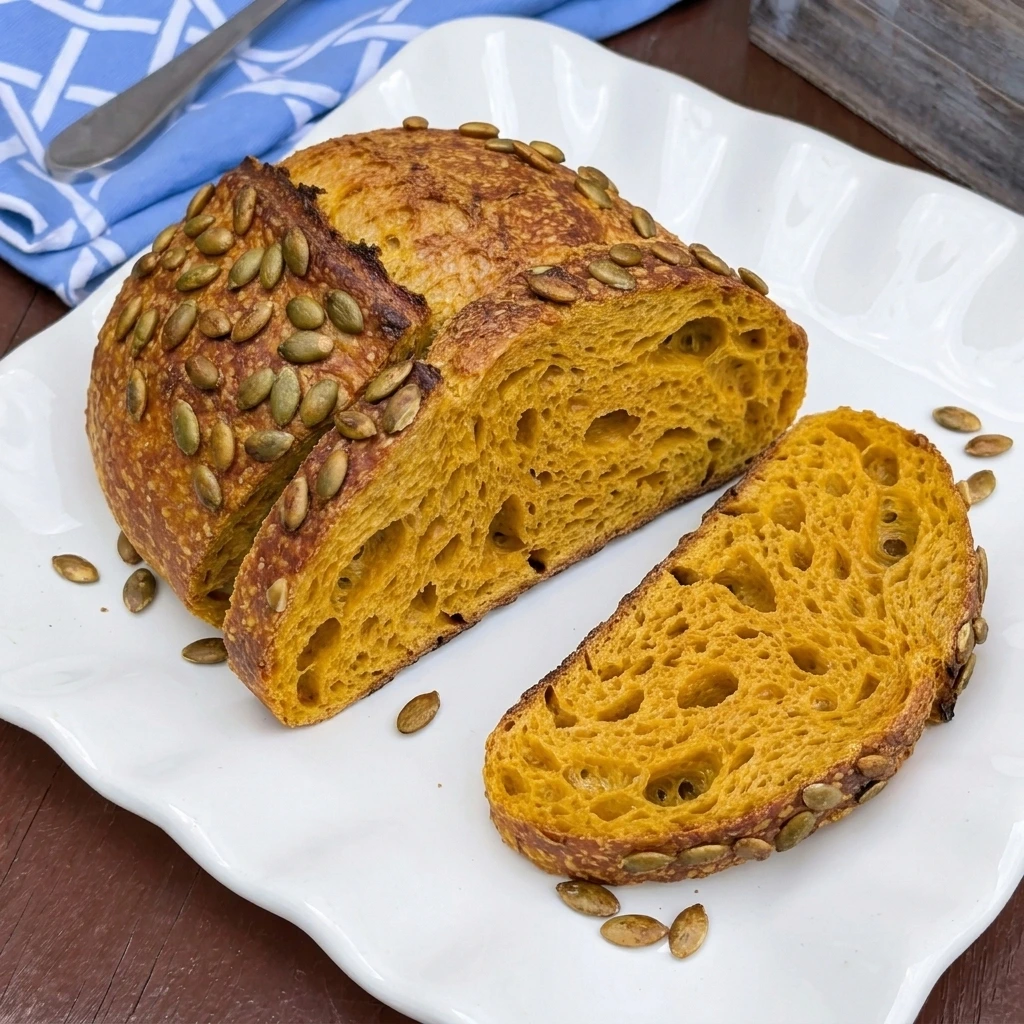
Perfect for thick toast or breakfast sandwiches with some salted butter on the side. A classic pumpkin sourdough bread recipe is one of my go-to easy fall breakfasts. Not only does it make for a super delicious loaf but it develops deep flavor and keeps me satisfied for hours. Also there are no complicated add-ins or fussy fillings needed.
And meal prep is a cinch. I often bake a loaf on Sunday to enjoy with Pecan Pumpkin Granola for breakfast and a snack on Monday and Tuesday. With just a few basic ingredients probably already in the fridge and pantry you can shape a rustic loaf or make thick toast or even turn slices into a cozy breakfast sandwich for a fancy and comforting dish.
Ingredients
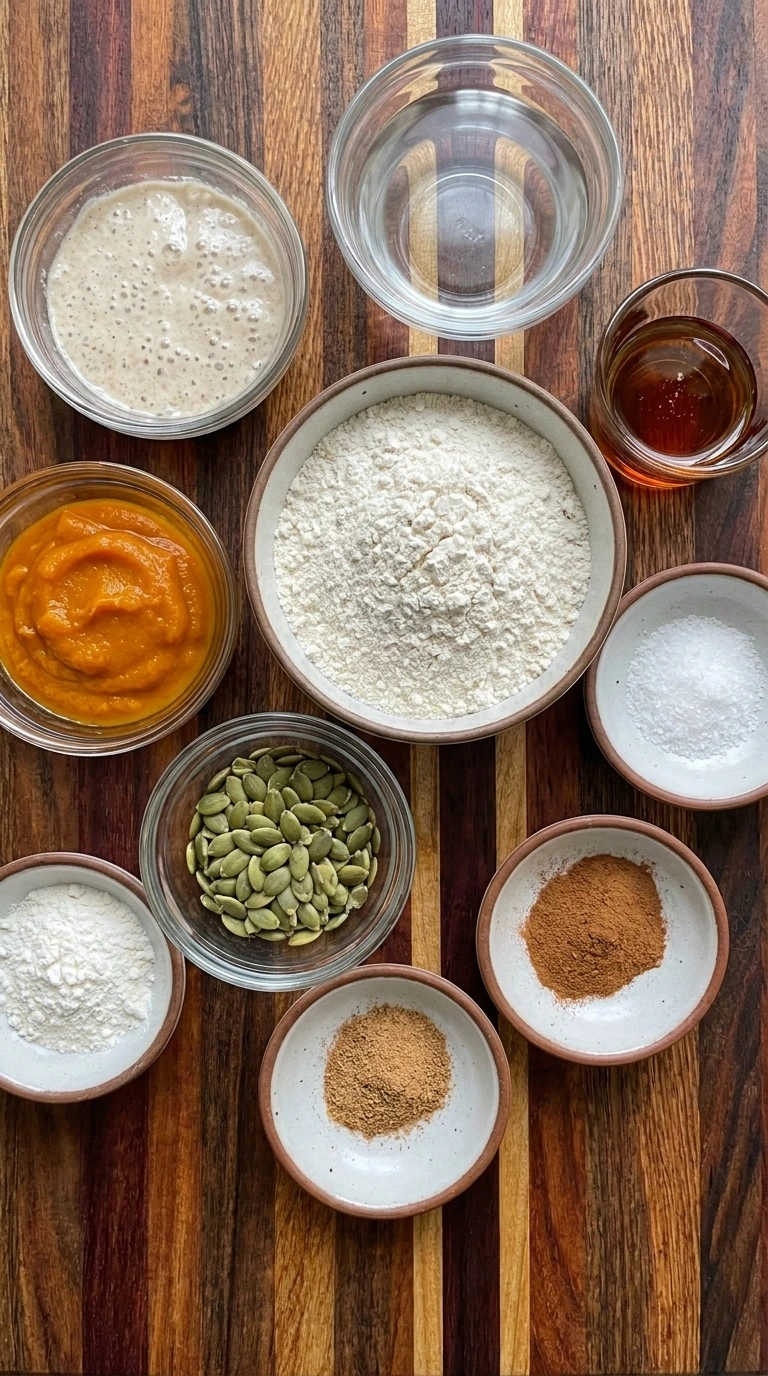
Here is what I use for this recipe and you can adjust nuts or spices based on preference:
- Active sourdough starter: Provides natural yeast and lactic acid for lift and a gently tangy flavor.
- Pumpkin puree: Adds moisture and warm orange color while keeping the crumb tender.
- Bread flour: Builds enough gluten strength to support the moist pumpkin dough.
- Water: Hydrates the flour and balances the thickness of the pumpkin puree.
- Pure maple syrup: Adds gentle sweetness and supports browning across the crust.
- Fine sea salt: Strengthens the dough structure and sharpens the pumpkin and spice flavors.
- Ground cinnamon: Adds warm fall spice throughout the loaf without overpowering the sourdough.
- Ground nutmeg: Deepens the autumn flavor with a subtle earthy warmth.
- Pumpkin seeds: Create a crisp nutty topping and add visual texture to the baked crust.
- Rice flour: Prevents sticking during proofing and helps preserve the shaped loaf.
Tools You’ll Need
- Digital kitchen scale: Measures flour and liquids accurately for a consistent dough.
- Large mixing bowl: Provides space for mixing and folding and bulk fermentation.
- Dough scraper: Helps lift and shape the sticky pumpkin dough with less tearing.
- Proofing basket or towel lined bowl: Supports the shaped loaf during its final cold proof.
- Cast iron Dutch oven: Traps steam for strong oven spring and a crisp crust.
- Bread lame or sharp knife: Creates a controlled score that guides expansion during baking.
- Cooling rack: Allows air to circulate so the crust stays crisp while the crumb sets.
Instructions
Step 1: Mix the pumpkin dough
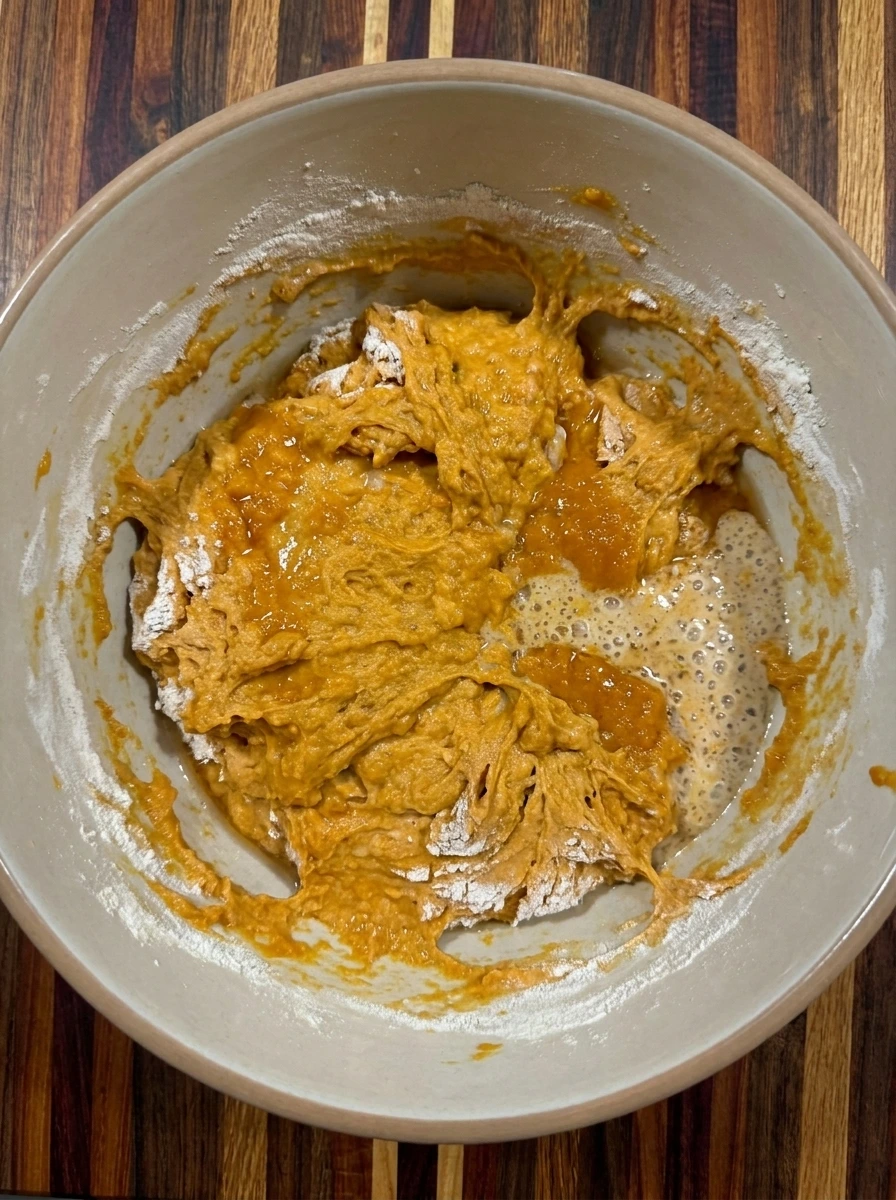
Combine the active starter with pumpkin puree and water and maple syrup until the mixture turns smooth and evenly orange. Fold in the bread flour until no dry patches remain and the dough becomes rough and shaggy with irregular folds.
Tip: Use a lively starter near its peak so the pumpkin dough gains strength and rises predictably during the long fermentation.
Step 2: Fold in the salt and spices
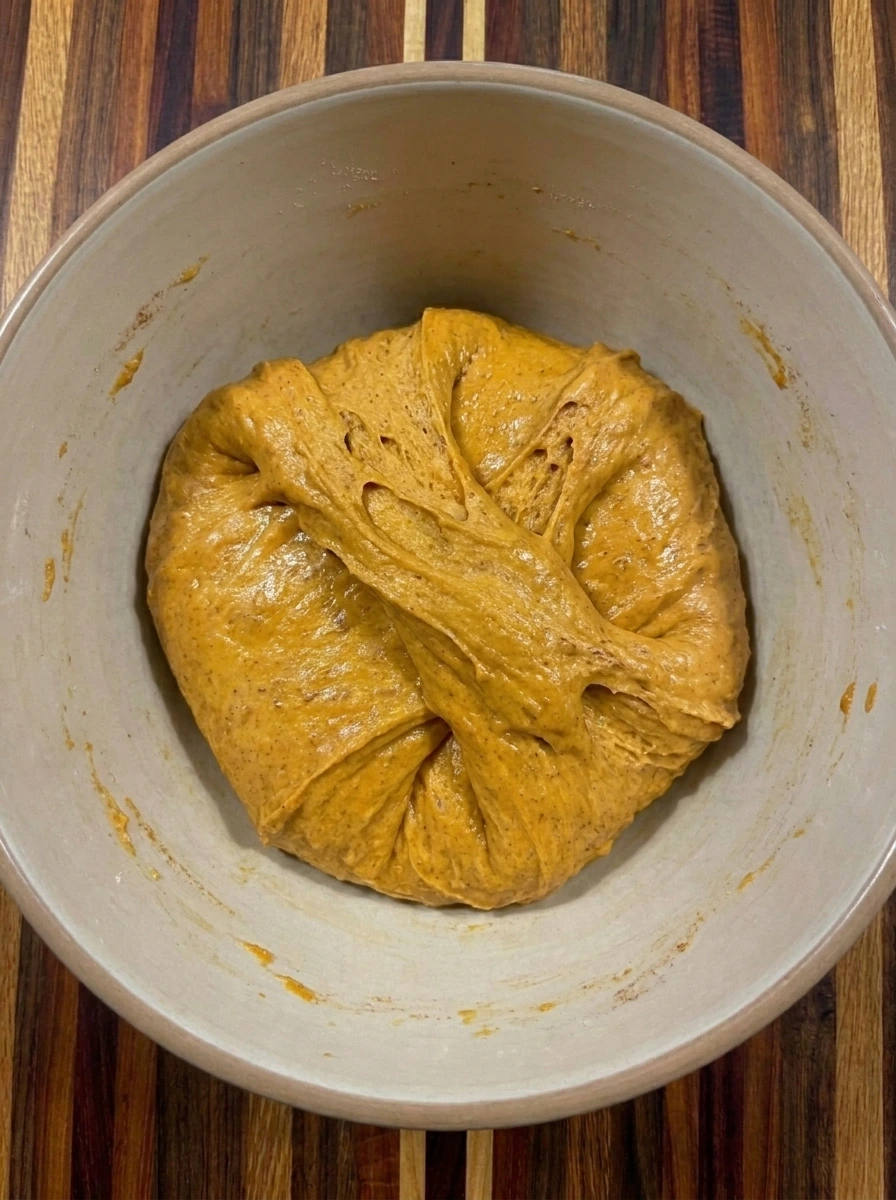
Scatter the salt and cinnamon and nutmeg over the rested dough then pinch and fold until the spices disappear into the orange mass. The dough changes from rough and loose to smoother and more elastic with darker spice speckles spread unevenly through the folds.
Tip: Dampen your hands before folding so the sticky pumpkin dough releases more easily without adding excess flour.
Step 3: Bulk ferment until airy

Let the dough rise until it looks puffier and holds soft rounded edges with bubbles appearing beneath the surface. Perform gentle folds during the rise so the dough gathers toward the center and develops a stronger domed structure instead of spreading flat.
Tip: Judge bulk fermentation by visible bubbles and a noticeable rise rather than the clock because pumpkin can slow the dough.
Step 4: Shape and coat the loaf
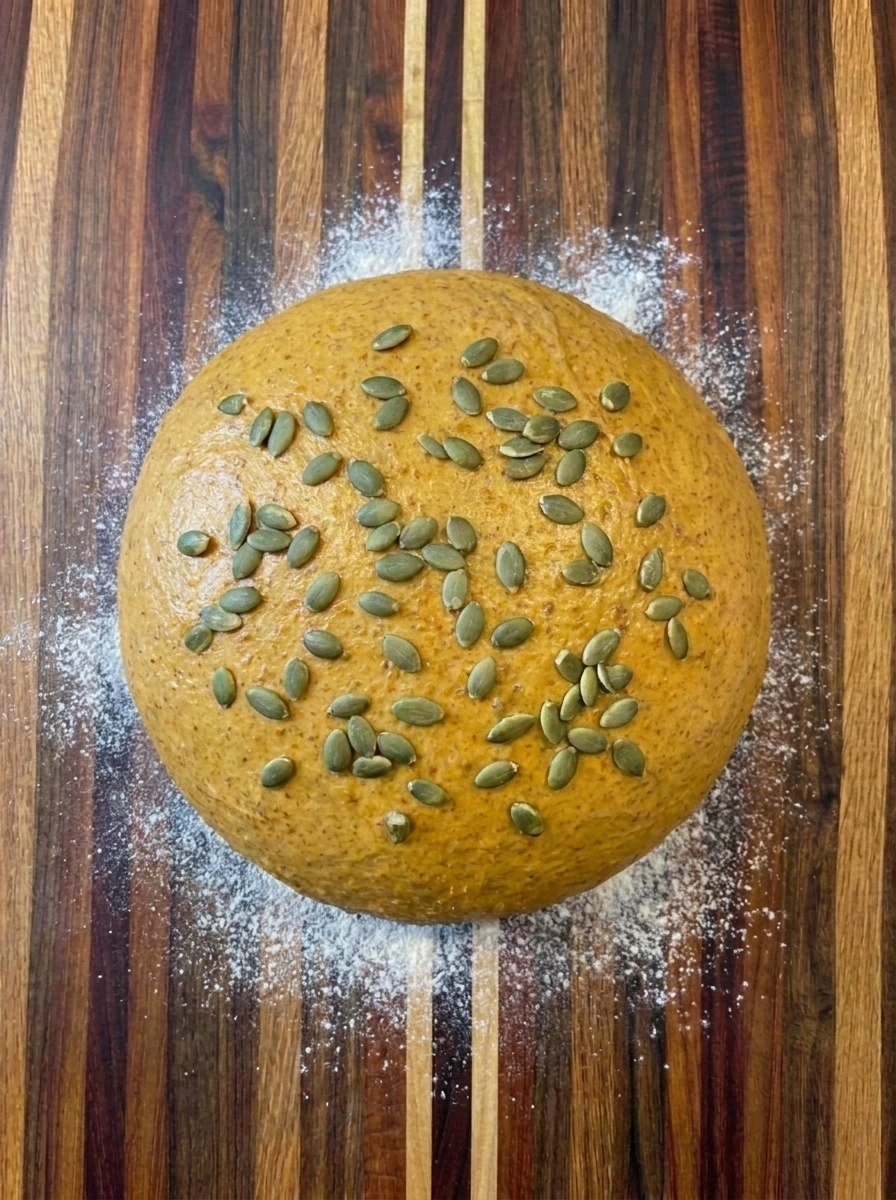
Turn the airy dough into a loose round then tighten it into a rustic boule with the seam gathered underneath. Set the shaped loaf into a rice floured proofing bowl then scatter pumpkin seeds unevenly over the exposed top so some areas remain bare.
Tip: Build surface tension with gentle pulls and stop before the moist dough tears or loses its trapped fermentation bubbles.
Step 5: Score and bake the loaf
Transfer the fully proofed loaf into a cast iron Dutch oven then cut one curved score across the top so the dough can expand. Bake until the loaf rises and the score opens into a rugged ridge while the orange crust deepens to golden brown with darker toasted seeds.
Tip: Bake with the lid on first for strong oven spring then remove it so the crust can deepen and become crisp.
Step 6: Slice and serve the bread
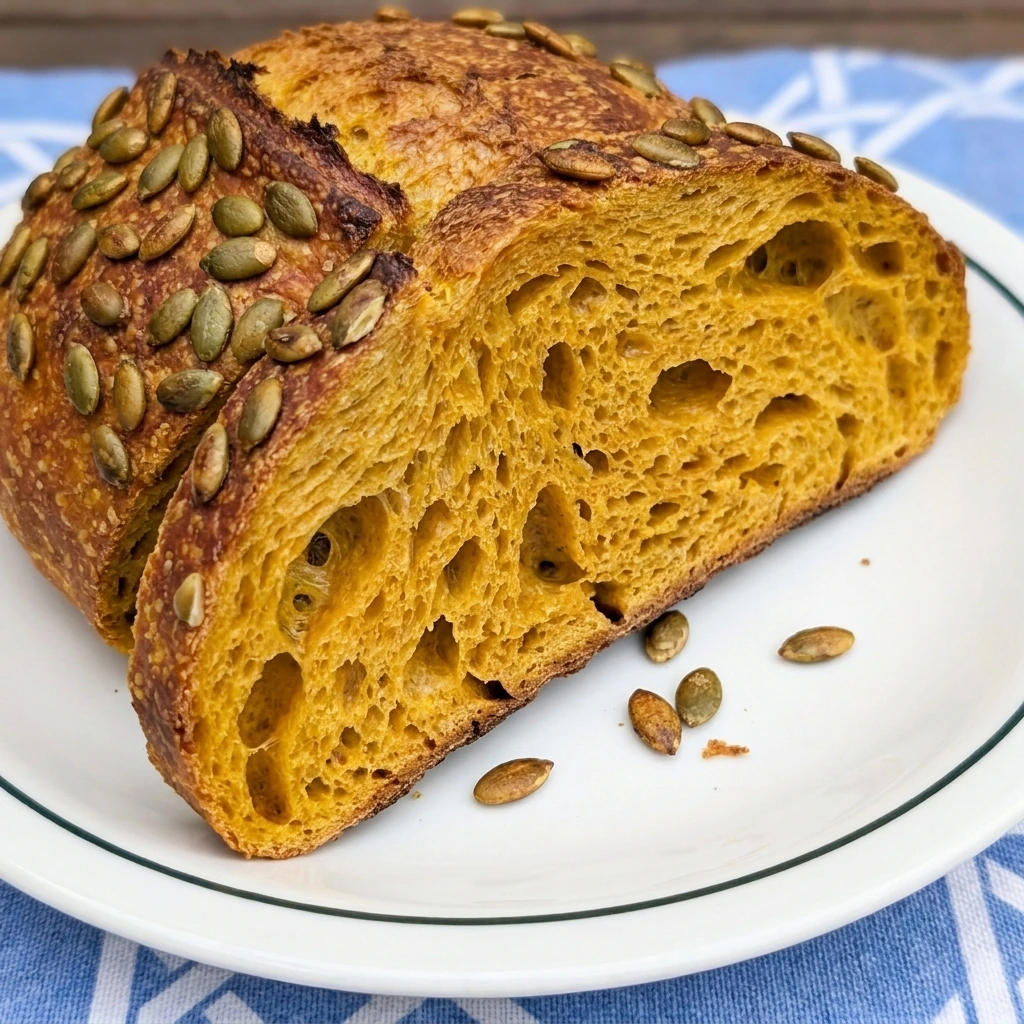
Cool the loaf completely then cut one thick slice to expose the moist orange crumb and irregular fermentation holes. Place the slice beside the remaining loaf so the crisp crust and tender interior are both visible with a few loose seeds resting naturally nearby.
Tip: Wait until the loaf is fully cool before slicing so the moist pumpkin crumb sets cleanly instead of turning gummy.
Pro Tips
- Use pumpkin puree rather than pumpkin pie filling so the dough keeps the right moisture level and a clean savory sweet flavor.
- Keep the dough slightly sticky during shaping because adding too much flour can make the finished pumpkin crumb dense and dry.
- Cold proof the shaped loaf overnight for deeper sourdough flavor and cleaner scoring before it goes into the hot baking vessel.
- Let the loaf cool for at least two hours because pumpkin holds extra moisture and the crumb needs time to finish setting.
Storage Instructions
Store the completely cooled loaf cut side down on a wooden board for the first day so the crust stays crisp and the crumb remains moist. For two to three days wrap the loaf loosely in a clean towel then place it in a bread box or paper bag. Avoid sealing a warm loaf because trapped steam softens the crust and can make the crumb gummy. For longer storage slice the bread then freeze the pieces in a sealed freezer bag with parchment between them. Toast individual slices directly from frozen until the edges turn crisp. Refresh a whole thawed loaf in a warm oven for several minutes. Let it rest briefly before cutting so the pumpkin crumb stays tender rather than compressed.
Frequently Asked Questions
A weak starter or short bulk rise can limit lift so wait for visible bubbles and a clear increase in volume.
Yes the shaped loaf can cold proof overnight for deeper flavor and easier scoring before baking.
Yes use plain canned pumpkin puree and avoid sweetened pumpkin pie filling because it changes hydration.
Bake until deeply browned then cool the loaf completely before slicing so the moist crumb can set.
See You in the Kitchen
This pumpkin sourdough bread is a great way to satisfy your cozy fall baking cravings without picking up a packaged loaf from the store.
I typically make Cinnamon Apple Granola or Cinnamon Sugar Pumpkin Donuts at the same time I plan my sourdough breakfast and that way all of my weekend treats will be ready at the same time.
Even my kids love this one!
Print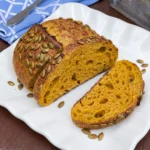
pumpkin sourdough bread
- Total Time: 20 hours
- Yield: 10 servings
Description
This easy pumpkin sourdough bread brings cozy fall flavor to a naturally fermented loaf with pumpkin puree and warm cinnamon. It is a quick and simple way to use an active starter while creating the best tender crumb and lightly crisp crust. Serve it for brunch or holiday breakfast and slice it for meal prep or a potluck table. The healthy pumpkin adds moisture and color while the sourdough process builds rich flavor that works for toast or sandwiches.
Ingredients
- 100 g Active sourdough starter
- 180 g Pumpkin puree
- 450 g Bread flour
- 170 g Water
- 30 g Pure maple syrup
- 10 g Fine sea salt
- 2 tsp Ground cinnamon
- 1/4 tsp Ground nutmeg
- 30 g Pumpkin seeds
- 2 tbsp Rice flour
Instructions
- Combine the active starter with pumpkin puree and water and maple syrup until the mixture turns smooth and evenly orange. Fold in the bread flour until no dry patches remain and the dough becomes rough and shaggy with irregular folds.
- Scatter the salt and cinnamon and nutmeg over the rested dough then pinch and fold until the spices disappear into the orange mass. The dough changes from rough and loose to smoother and more elastic with darker spice speckles spread unevenly through the folds.
- Let the dough rise until it looks puffier and holds soft rounded edges with bubbles appearing beneath the surface. Perform gentle folds during the rise so the dough gathers toward the center and develops a stronger domed structure instead of spreading flat.
- Turn the airy dough into a loose round then tighten it into a rustic boule with the seam gathered underneath. Set the shaped loaf into a rice floured proofing bowl then scatter pumpkin seeds unevenly over the exposed top so some areas remain bare.
- Transfer the fully proofed loaf into a cast iron Dutch oven then cut one curved score across the top so the dough can expand. Bake until the loaf rises and the score opens into a rugged ridge while the orange crust deepens to golden brown with darker toasted seeds.
- Cool the loaf completely then cut one thick slice to expose the moist orange crumb and irregular fermentation holes. Place the slice beside the remaining loaf so the crisp crust and tender interior are both visible with a few loose seeds resting naturally nearby.
Notes
Pro Tips:
- Use pumpkin puree rather than pumpkin pie filling so the dough keeps the right moisture level and a clean savory sweet flavor.
- Keep the dough slightly sticky during shaping because adding too much flour can make the finished pumpkin crumb dense and dry.
- Cold proof the shaped loaf overnight for deeper sourdough flavor and cleaner scoring before it goes into the hot baking vessel.
- Let the loaf cool for at least two hours because pumpkin holds extra moisture and the crumb needs time to finish setting.
Storage: Store the completely cooled loaf cut side down on a wooden board for the first day so the crust stays crisp and the crumb remains moist. For two to three days wrap the loaf loosely in a clean towel then place it in a bread box or paper bag. Avoid sealing a warm loaf because trapped steam softens the crust and can make the crumb gummy. For longer storage slice the bread then freeze the pieces in a sealed freezer bag with parchment between them. Toast individual slices directly from frozen until the edges turn crisp. Refresh a whole thawed loaf in a warm oven for several minutes. Let it rest briefly before cutting so the pumpkin crumb stays tender rather than compressed.
- Prep Time: 30 minutes
- Cook Time: 45 minutes
- Category: Breakfast
- Cuisine: American