


When you want something different from ordinary holiday side dishes this Thanksgiving Stuffing offers a delicious traditional favorite. This homemade stuffing recipe is buttery and simple and packed with flavor which makes it perfect for cozy dinners or holiday gatherings.
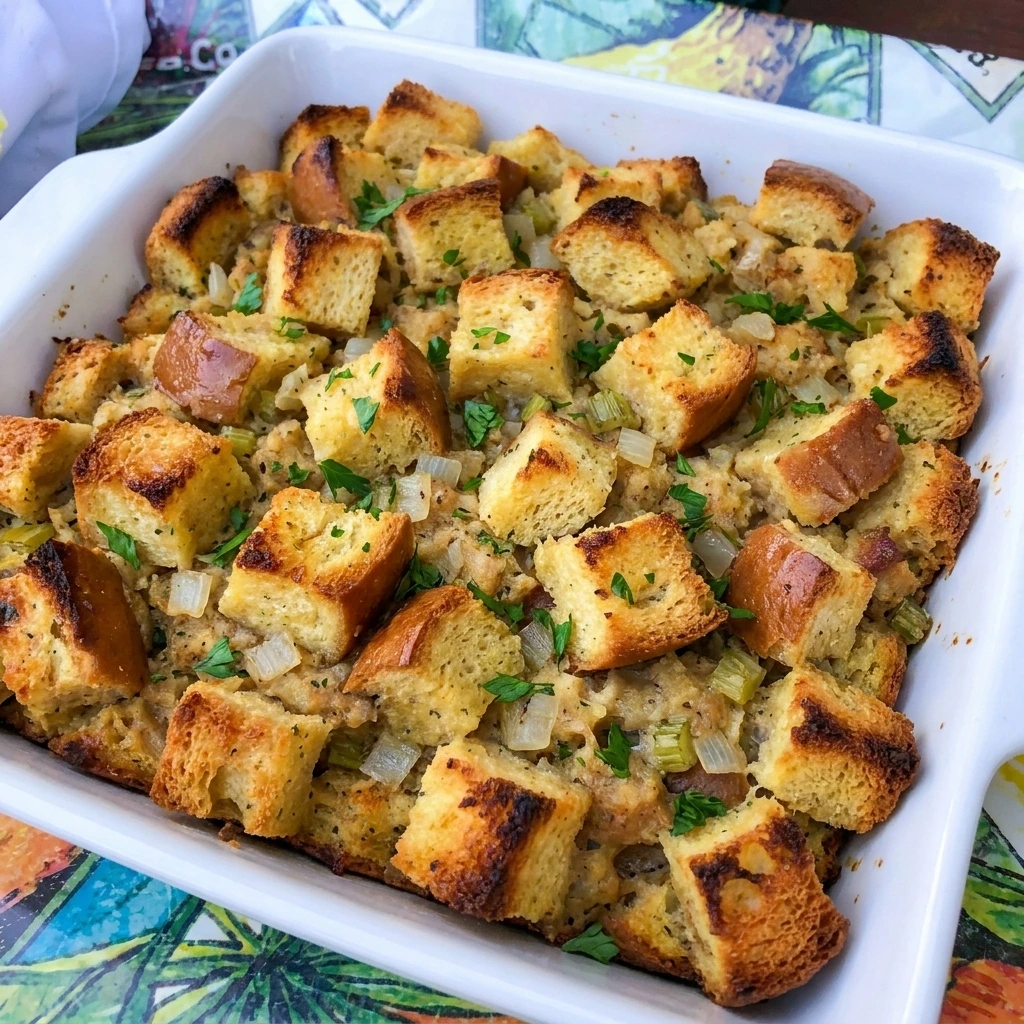
This recipe is perfect for Thanksgiving and Christmas dinner and a Friendsgiving meal or as a comforting side for a weeknight dinner. If you want more turkey dinner ideas then also check out this Maple-Glazed Turkey Breast recipe for another delicious holiday favorite.
I love how this Thanksgiving Stuffing combines tender bread cubes with savory herbs and buttery vegetables while the top becomes beautifully golden and slightly crispy. It is an easy recipe to prepare for family gatherings and it brings that familiar homemade flavor everyone looks forward to during the holidays.
Ingredients
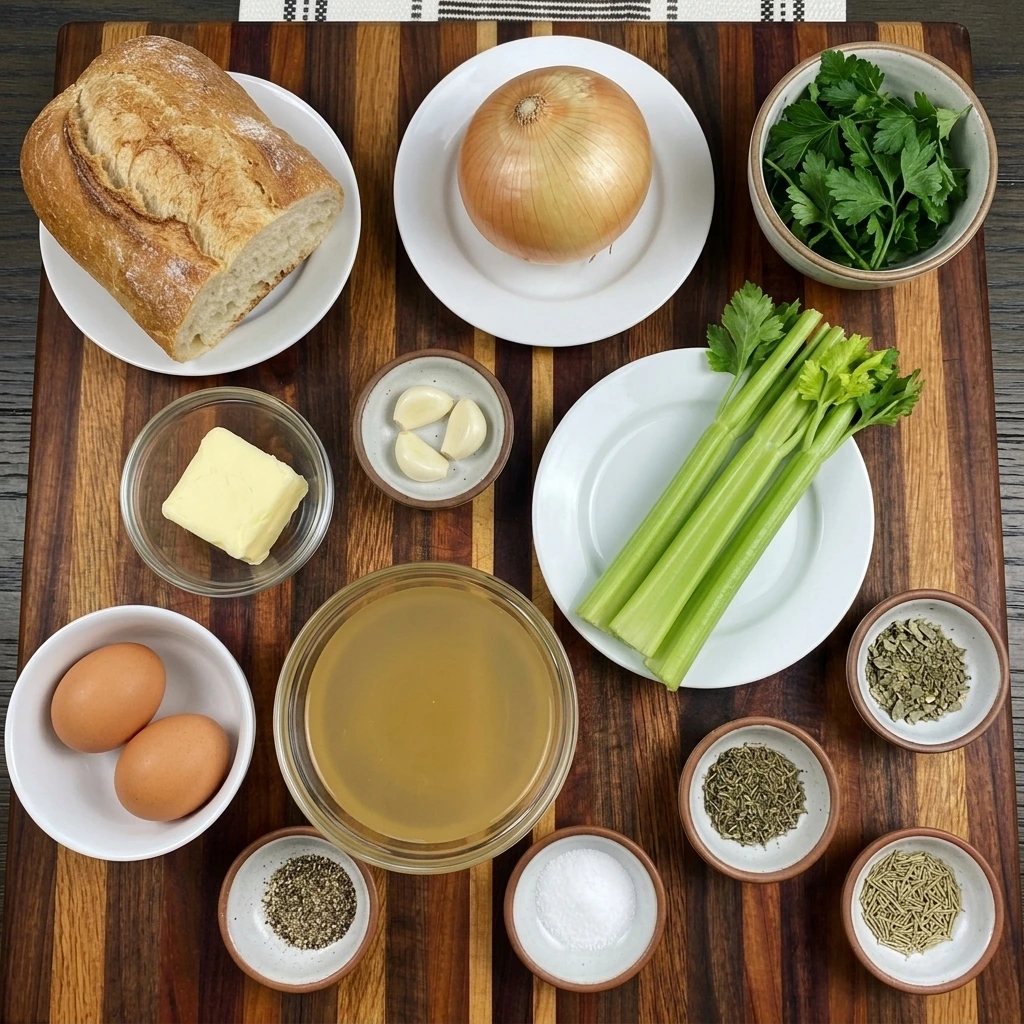
Here is what I use for this recipe :
- Day-old French bread: Provides the hearty base of the stuffing while its slightly dry texture absorbs the seasoned broth without becoming excessively mushy.
- Unsalted butter: Adds rich buttery flavor while helping soften the vegetables and creating a golden finish during baking.
- Yellow onion: Creates a savory and slightly sweet foundation that deepens the flavor as the onion softens.
- Celery: Adds a classic aromatic flavor and a delicate vegetable texture that balances the soft bread.
- Garlic: Provides a warm savory aroma that complements the butter and traditional poultry herbs.
- Chicken broth: Moistens the toasted bread cubes and distributes savory flavor throughout the stuffing without making it watery.
- Large eggs: Help bind the moistened bread cubes together while keeping the baked interior soft and cohesive.
- Fresh parsley: Adds bright herbal freshness and small green flecks that balance the rich buttery ingredients.
- Dried sage: Provides the familiar earthy flavor traditionally associated with Thanksgiving stuffing.
- Dried thyme: Introduces a gentle woodsy aroma that enhances the savory bread and vegetable mixture.
- Dried rosemary: Adds a fragrant herbal note that complements the sage and thyme.
- Salt: Balances the buttery and herbal flavors while accounting for the saltiness of the broth.
- Black pepper: Adds gentle warmth and a subtle peppery flavor to the finished stuffing.
Tools I Use :
- Chef’s knife: Cuts the bread into rustic cubes and chops the onion and celery and garlic into evenly manageable pieces.
- Cutting board: Provides a stable surface for preparing the bread and vegetables before cooking.
- Two large baking sheets: Hold the bread cubes in loose layers so they dry evenly during the initial toasting stage.
- Large cast iron skillet: Softens the onion and celery and garlic in melted butter while distributing heat evenly.
- Large mixing bowl: Provides enough room to gently combine the toasted bread with vegetables and seasoned liquid.
- Small mixing bowl: Holds the chicken broth and eggs while they are combined before moistening the bread.
- Whisk: Blends the eggs with the broth so they are distributed evenly throughout the stuffing.
- Wooden spoon or silicone spatula: Stirs the softened vegetables and gently folds the bread mixture without crushing the cubes.
- 9 by 13-inch ceramic baking dish: Holds the assembled stuffing during baking while supporting a tender center and crisp golden surface.
- Aluminum foil: Covers the stuffing during the first baking stage to retain moisture before the top is browned.
- Measuring cups and spoons: Measure the broth and herbs and vegetables accurately for consistent moisture and seasoning.
- Food thermometer: Checks that the center of the egg-bound stuffing reaches 165 degrees Fahrenheit before serving.
Instructions
Step 1: Cube the bread and chop the vegetables
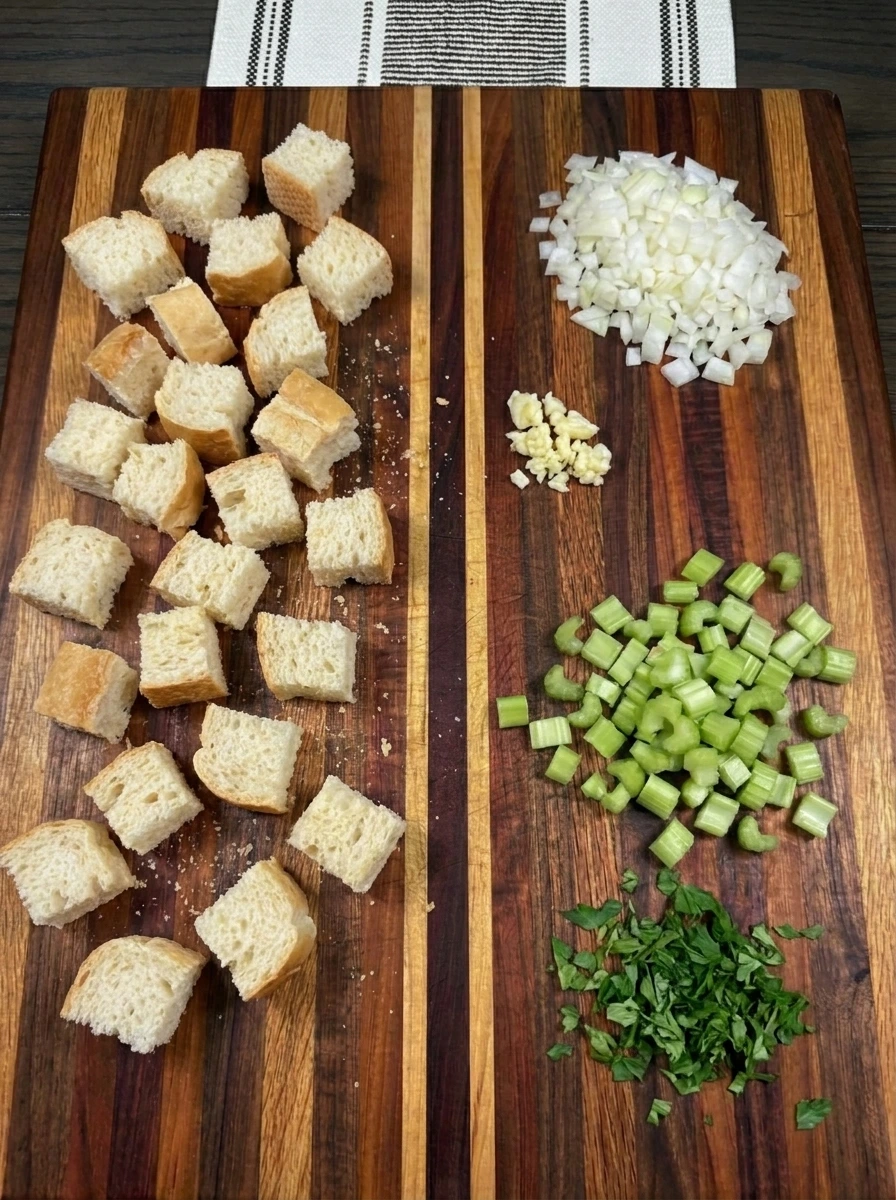
Cut the one pound loaf of day-old French bread into roughly one-inch cubes to make approximately ten cups. Keep the pieces slightly irregular because different edges and shapes will develop a more natural texture during baking. Dice the medium yellow onion and three celery stalks into small pieces and mince the three garlic cloves. Chop the parsley into small leafy fragments and keep the prepared ingredients separate so they can be added at the correct stages.
Tip: Cut bread cubes into slightly uneven pieces around one inch wide so the finished stuffing develops both crispy edges and tender centers.
Step 2: Toast the bread cubes until dry
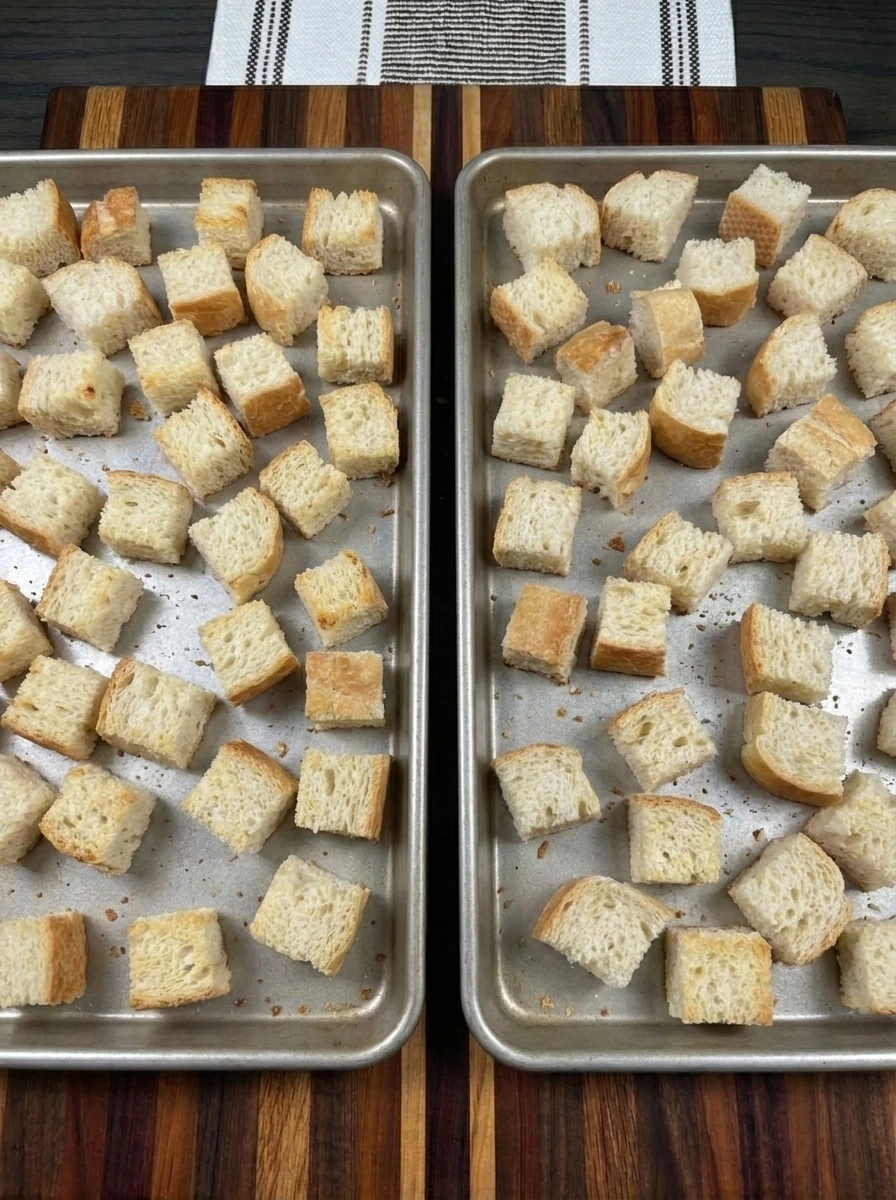
Preheat the oven to 300 degrees Fahrenheit or 150 degrees Celsius. Spread all ten cups of bread cubes across two large baking sheets in loose layers with some natural gaps between the pieces. Bake for approximately 15 minutes until the cubes feel dry and lightly crisp but have not developed much color. Remove them from the oven and increase the temperature to 375 degrees Fahrenheit or 190 degrees Celsius for the final baking stage.
Tip: Dry the bread gently rather than deeply browning it because lightly toasted cubes absorb broth more evenly without collapsing.
Step 3: Sauté the onion and celery in butter
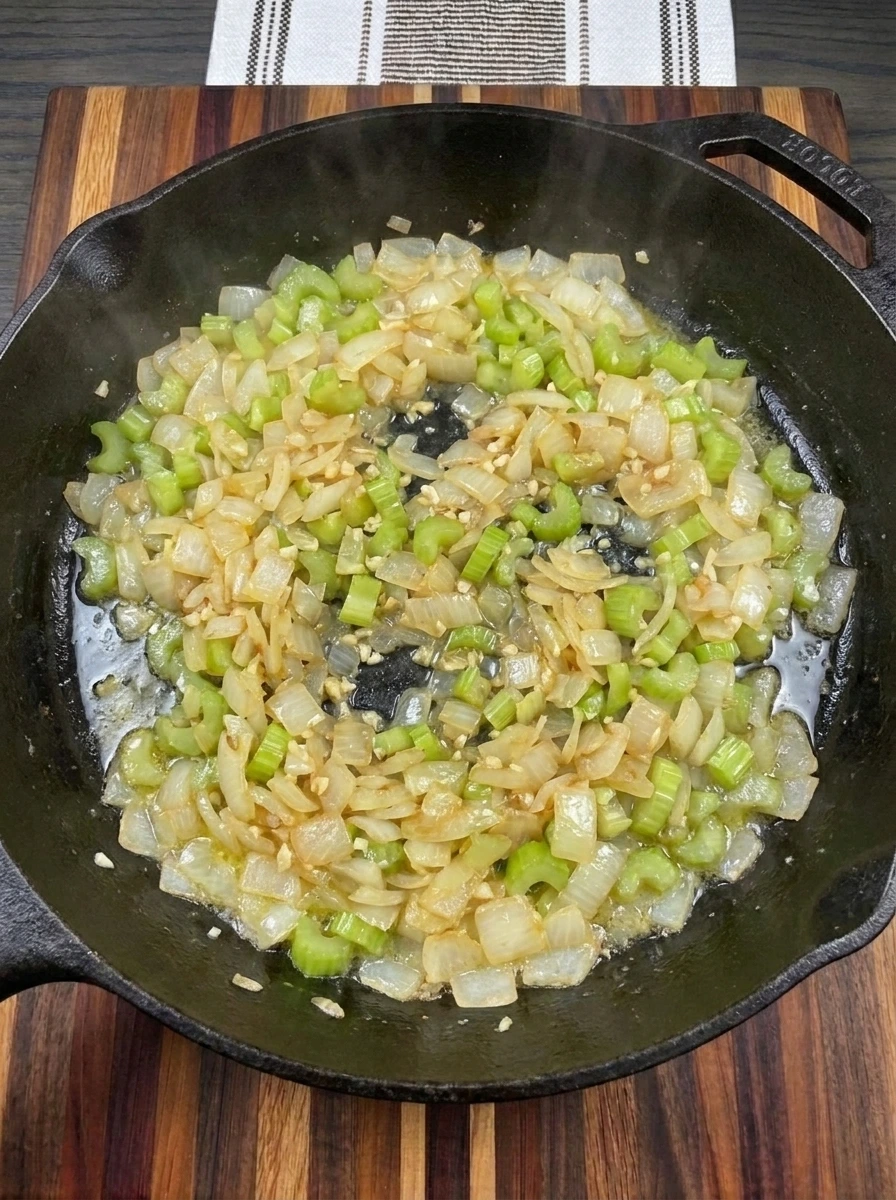
Melt the half cup of butter in a large skillet over medium heat. Add the diced onion and celery and cook for approximately 8 minutes while stirring occasionally until the vegetables soften and the onion turns translucent. Add the minced garlic and cook for one more minute until fragrant. The vegetables should look glossy and tender with faint golden edges while the butter remains visible around the mixture.
Tip: Cook the vegetables until tender but not deeply browned because gentle softening creates a sweeter and more balanced stuffing flavor.
Step 4: Combine the bread with seasoned broth
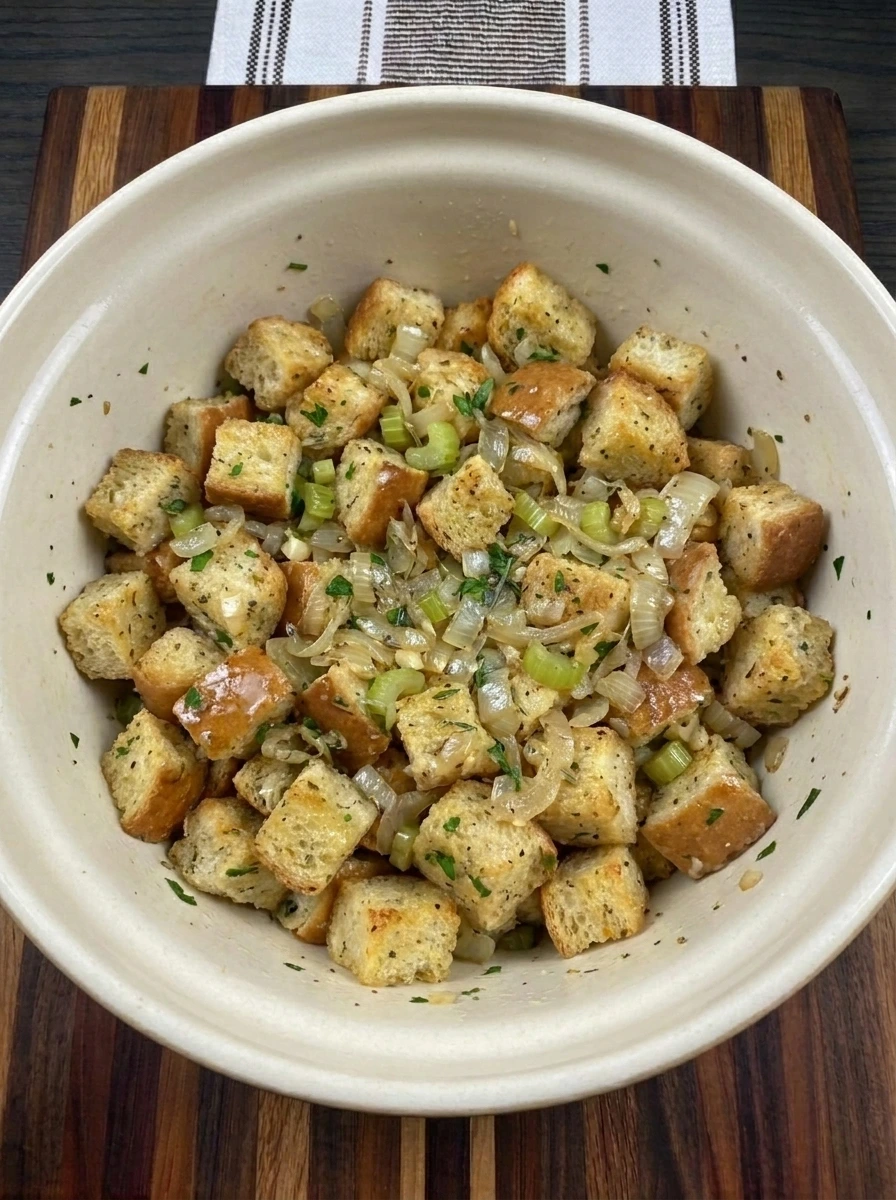
Transfer the ten cups of toasted bread cubes to a large mixing bowl and add the softened onion and celery mixture along with all the melted butter. Scatter in the chopped parsley and dried sage and thyme and rosemary before adding the salt and black pepper. Beat the two eggs into the two cups of chicken broth until combined and then pour the liquid gradually over the bread. Gently fold everything together until the cubes are evenly moistened with no dry pockets or excess liquid pooling at the bottom. The bread should hold its shape while developing a soft and slightly cohesive texture.
Tip: Add the broth mixture gradually and fold gently so the cubes become evenly moist while retaining their rustic shape and structure.
Step 5: Spread the stuffing into a baking dish
Transfer the entire moistened bread mixture into a lightly buttered 9 by 13-inch ceramic baking dish. Spread the bread in an even overall layer without pressing it down tightly because loose cubes allow steam to circulate and help keep the interior tender. Leave some bread corners raised above the surface and expose small portions of the herbs and softened vegetables. Cover the baking dish with foil so the stuffing can warm through without drying out during the first part of baking.
Tip: Avoid packing the stuffing tightly into the dish because a loose uneven surface allows the top to become beautifully crisp.
Step 6: Bake until golden and crispy
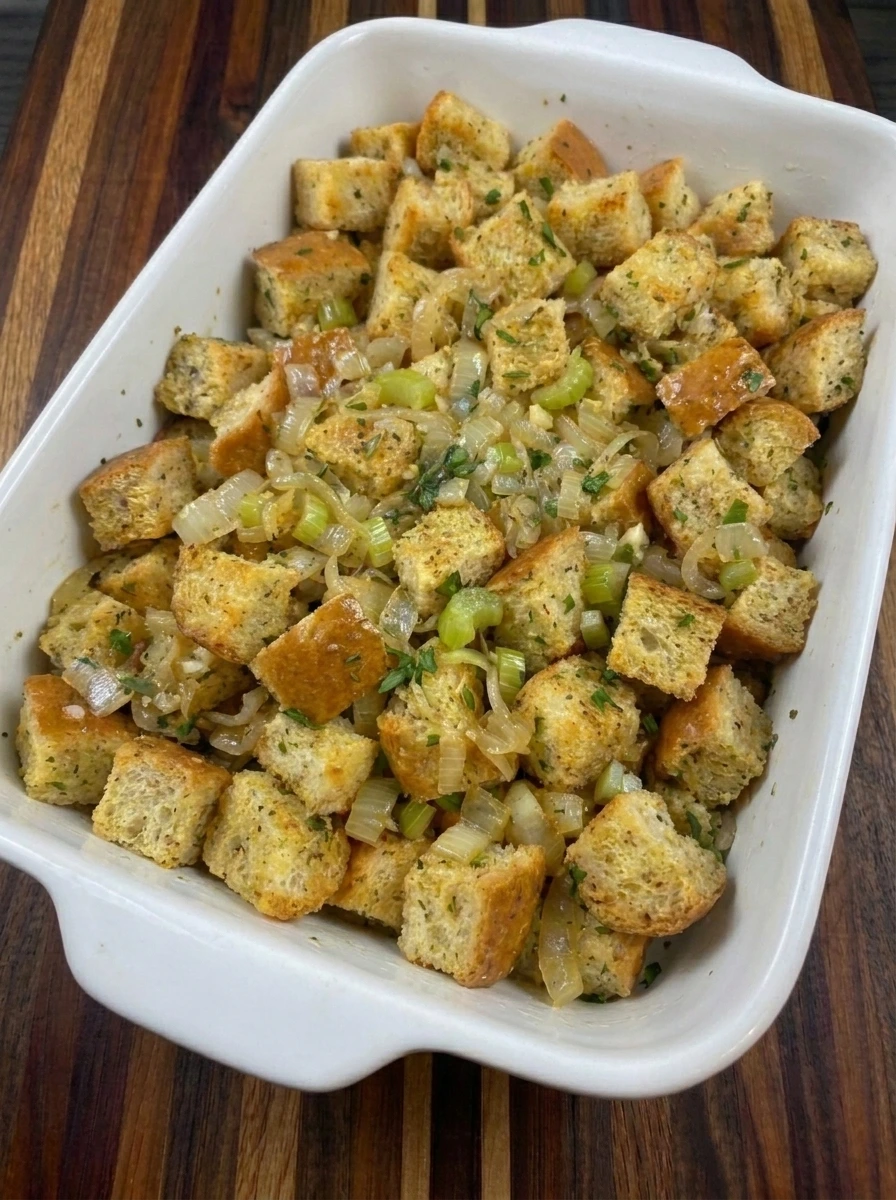
Bake the covered stuffing at 375 degrees Fahrenheit or 190 degrees Celsius for 25 minutes. Remove the foil and continue baking for approximately 15 to 20 minutes until the exposed bread develops a crisp golden-brown crust and the center reaches 165 degrees Fahrenheit or 74 degrees Celsius. The top should show darker toasted corners and lighter golden pieces while the center stays tender and moist. Allow the baked stuffing to rest for approximately 5 minutes so the bread settles before serving.
Tip: Bake uncovered during the final minutes to develop crispy edges while checking that the center reaches a safe 165 degrees Fahrenheit.
Step 7: Serve a warm portion of stuffing
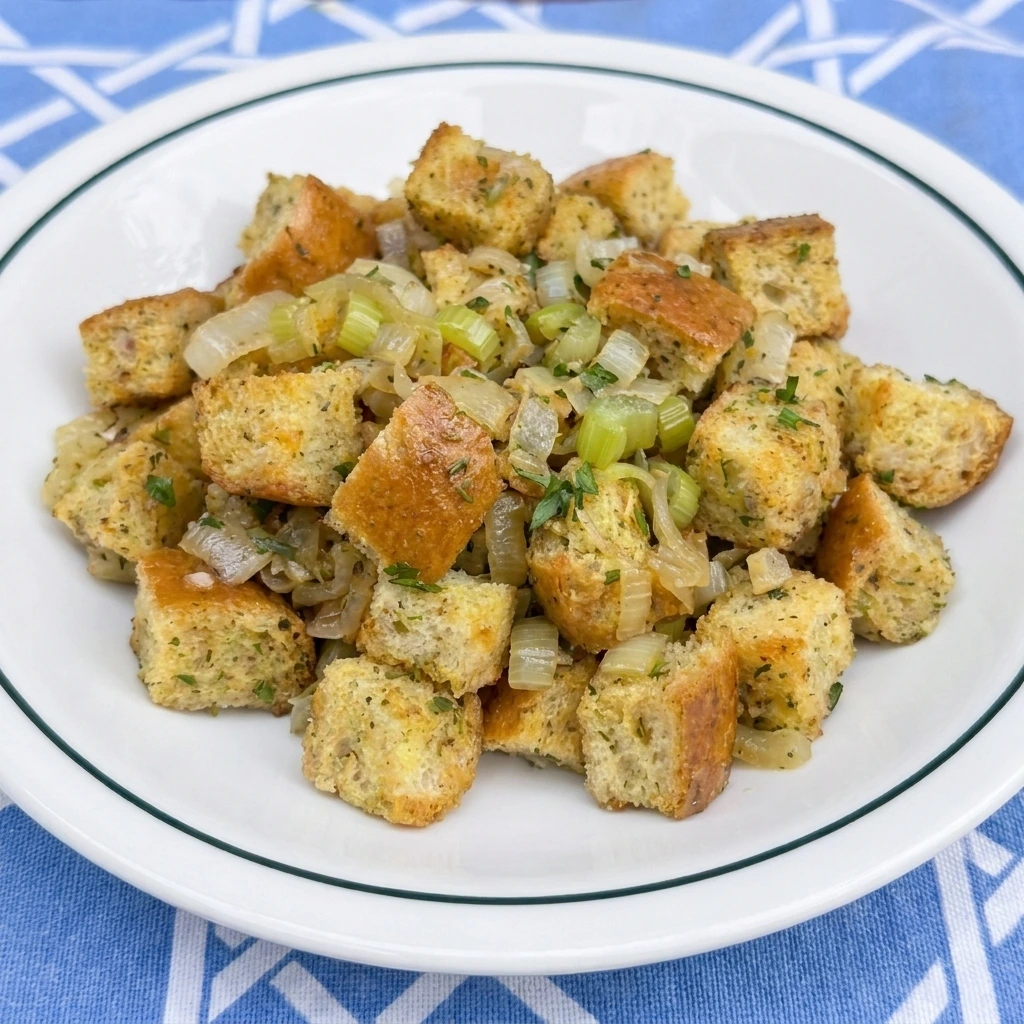
Scoop one generous serving of the finished stuffing onto a clean white plate. Keep the portion loosely gathered so the crispy golden top and tender interior remain visible together. Arrange the serving with naturally overlapping bread chunks and a few loose pieces near the edges. The contrast between the toasted crust and moist center makes the finished stuffing especially appealing alongside Thanksgiving turkey and gravy.
Tip: Serve the stuffing while warm so the exterior remains lightly crisp and the inside retains its buttery and tender texture.
Pro Tips
- Use day-old French bread or dry fresh cubes gently in the oven because slightly stale bread absorbs broth without turning mushy.
- For the best texture add the broth and egg mixture gradually while folding the bread gently to avoid breaking the cubes.
- For an extra crispy top spread the stuffing loosely in the baking dish and leave the bread uncovered during the final baking minutes.
- Prepare the bread and vegetables ahead of time but combine the wet ingredients shortly before baking for the freshest texture.
Storage Instructions
Allow the cooked Thanksgiving Stuffing to cool slightly after serving and transfer leftovers into shallow airtight containers within two hours of baking. Refrigerate promptly at 40 degrees Fahrenheit or below and keep for up to three to four days. To reheat refrigerated stuffing place the desired portion in a baking dish and add a small splash of chicken broth if the bread looks dry.
Cover with foil and warm at 350 degrees Fahrenheit until the center reaches 165 degrees Fahrenheit. Remove the foil briefly near the end if you want to restore some crispness to the top. For longer storage divide the cooked stuffing into individual portions and seal them in freezer-safe containers or bags. Freeze promptly and use within approximately two to three months for the best texture and flavor. Thaw overnight in the refrigerator before reheating or reheat directly from frozen until the center reaches 165 degrees Fahrenheit.
For advance preparation keep dried bread cubes at room temperature in a sealed container and refrigerate the cooked vegetable mixture separately. Combine the broth and eggs with the other ingredients shortly before baking to prevent the bread from becoming overly soft during extended storage.
Frequently Asked Questions
Yes you can dry the bread and chop the vegetables a day ahead and refrigerate the cooked vegetables until assembly.
Use dried bread cubes and add broth gradually while gently folding until the bread is moist without liquid pooling.
Yes you can substitute vegetable broth in the same quantity for a meat-free version with similar moisture and flavor.
Store cooked stuffing in an airtight container and refrigerate within two hours for up to three to four days.
See You in the Kitchen
I hope you enjoy all the recipes I share with you including this delicious Thanksgiving Stuffing recipe.
I hope you try it with our Turkey and Stuffing Cups with Gravy or Turkey Stuffing Meatloaf and enjoy it and rate it and share it with your friends and family!
Print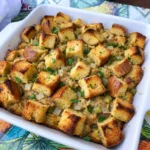
Thanksgiving Stuffing
- Total Time: 85 minutes
- Yield: 10 servings
Description
This Thanksgiving Stuffing is an easy and delicious holiday side dish made with golden bread cubes and buttery vegetables and fragrant herbs. It is one of the best simple ideas for Thanksgiving dinner or Christmas celebrations because the crispy top and tender center bring classic homemade comfort to every bite. The recipe uses quick preparation steps and familiar ingredients while offering a satisfying addition to a healthy balanced holiday meal or family potluck or party.
Ingredients
- 1 pound (about 10 cups cubed) Day-old French bread
- 1/2 cup (8 tablespoons) Unsalted butter
- 1 medium (about 1 cup diced) Yellow onion
- 3 medium stalks (about 1 cup diced) Celery
- 3 cloves (minced) Garlic
- 2 cups Chicken broth
- 2 Large eggs
- 1/4 cup chopped Fresh parsley
- 1 teaspoon Dried sage
- 1 teaspoon Dried thyme
- 1/2 teaspoon Dried rosemary
- 1/2 teaspoon or to taste Salt
- 1/2 teaspoon Black pepper
Instructions
- Cut the one pound loaf of day-old French bread into roughly one-inch cubes to make approximately ten cups. Keep the pieces slightly irregular because different edges and shapes will develop a more natural texture during baking.
Dice the medium yellow onion and three celery stalks into small pieces and mince the three garlic cloves. Chop the parsley into small leafy fragments and keep the prepared ingredients separate so they can be added at the correct stages.
- Preheat the oven to 300 degrees Fahrenheit or 150 degrees Celsius. Spread all ten cups of bread cubes across two large baking sheets in loose layers with some natural gaps between the pieces.
Bake for approximately 15 minutes until the cubes feel dry and lightly crisp but have not developed much color. Remove them from the oven and increase the temperature to 375 degrees Fahrenheit or 190 degrees Celsius for the final baking stage.
- Melt the half cup of butter in a large skillet over medium heat. Add the diced onion and celery and cook for approximately 8 minutes while stirring occasionally until the vegetables soften and the onion turns translucent.
Add the minced garlic and cook for one more minute until fragrant. The vegetables should look glossy and tender with faint golden edges while the butter remains visible around the mixture.
- Transfer the ten cups of toasted bread cubes to a large mixing bowl and add the softened onion and celery mixture along with all the melted butter. Scatter in the chopped parsley and dried sage and thyme and rosemary before adding the salt and black pepper.
Beat the two eggs into the two cups of chicken broth until combined and then pour the liquid gradually over the bread. Gently fold everything together until the cubes are evenly moistened with no dry pockets or excess liquid pooling at the bottom. The bread should hold its shape while developing a soft and slightly cohesive texture.
- Transfer the entire moistened bread mixture into a lightly buttered 9 by 13-inch ceramic baking dish. Spread the bread in an even overall layer without pressing it down tightly because loose cubes allow steam to circulate and help keep the interior tender.
Leave some bread corners raised above the surface and expose small portions of the herbs and softened vegetables. Cover the baking dish with foil so the stuffing can warm through without drying out during the first part of baking.
- Bake the covered stuffing at 375 degrees Fahrenheit or 190 degrees Celsius for 25 minutes. Remove the foil and continue baking for approximately 15 to 20 minutes until the exposed bread develops a crisp golden-brown crust and the center reaches 165 degrees Fahrenheit or 74 degrees Celsius.
The top should show darker toasted corners and lighter golden pieces while the center stays tender and moist. Allow the baked stuffing to rest for approximately 5 minutes so the bread settles before serving.
- Scoop one generous serving of the finished stuffing onto a clean white plate. Keep the portion loosely gathered so the crispy golden top and tender interior remain visible together.
Arrange the serving with naturally overlapping bread chunks and a few loose pieces near the edges. The contrast between the toasted crust and moist center makes the finished stuffing especially appealing alongside Thanksgiving turkey and gravy.
Notes
Pro Tips:
- Use day-old French bread or dry fresh cubes gently in the oven because slightly stale bread absorbs broth without turning mushy.
- For the best texture add the broth and egg mixture gradually while folding the bread gently to avoid breaking the cubes.
- For an extra crispy top spread the stuffing loosely in the baking dish and leave the bread uncovered during the final baking minutes.
- Prepare the bread and vegetables ahead of time but combine the wet ingredients shortly before baking for the freshest texture.
Storage: Allow the cooked Thanksgiving Stuffing to cool slightly after serving and transfer leftovers into shallow airtight containers within two hours of baking. Refrigerate promptly at 40 degrees Fahrenheit or below and keep for up to three to four days.
To reheat refrigerated stuffing place the desired portion in a baking dish and add a small splash of chicken broth if the bread looks dry. Cover with foil and warm at 350 degrees Fahrenheit until the center reaches 165 degrees Fahrenheit. Remove the foil briefly near the end if you want to restore some crispness to the top.
For longer storage divide the cooked stuffing into individual portions and seal them in freezer-safe containers or bags. Freeze promptly and use within approximately two to three months for the best texture and flavor. Thaw overnight in the refrigerator before reheating or reheat directly from frozen until the center reaches 165 degrees Fahrenheit.
For advance preparation keep dried bread cubes at room temperature in a sealed container and refrigerate the cooked vegetable mixture separately. Combine the broth and eggs with the other ingredients shortly before baking to prevent the bread from becoming overly soft during extended storage.
- Prep Time: 20 minutes
- Cook Time: 65 minutes
- Category: Dinner
- Cuisine: American