


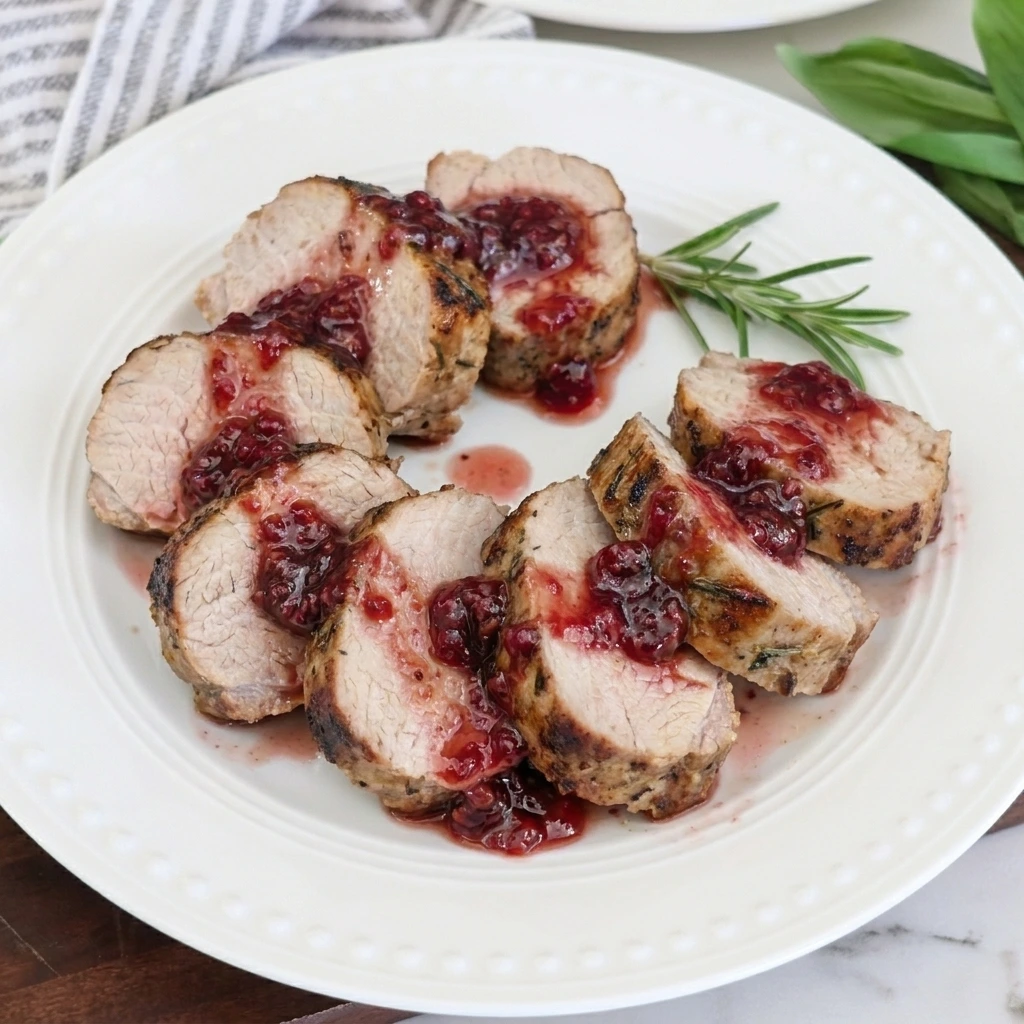
A nice steakhouse style dinner serves one of the best pork tenderloin plates I have ever tasted and a soft and juicy meat with a sweet raspberry glaze and simple spices and tender slices served with warm sides and fresh vegetables. Today I will show how I make my Raspberry Glazed Pork Tenderloin at home easily just with some easy to find ingredients. Just To know that my Raspberry Glazed Pork Tenderloin turned out so delicious and so juicy almost like a restaurant style dinner and I really love this dish.
Also I tried the same cooking method with a simple fruit glaze and the result was even better. If you love fresh tomato sides with cozy dinners then try my Tomato Rice Bowl with this pork. Usually pork tenderloin is served when I want a dinner that feels special yet still easy for a busy day.
It is so incredible and I recommend anyone to enjoy it and if you cannot order something like this from a restaurant then you can try out my recipe. Also for my recipe I use a skillet first for browning and then finish the pork in the oven. Simply season your pork tenderloin and cook it until tender then brush it with raspberry glaze until it turns glossy and rich.
Ingredients
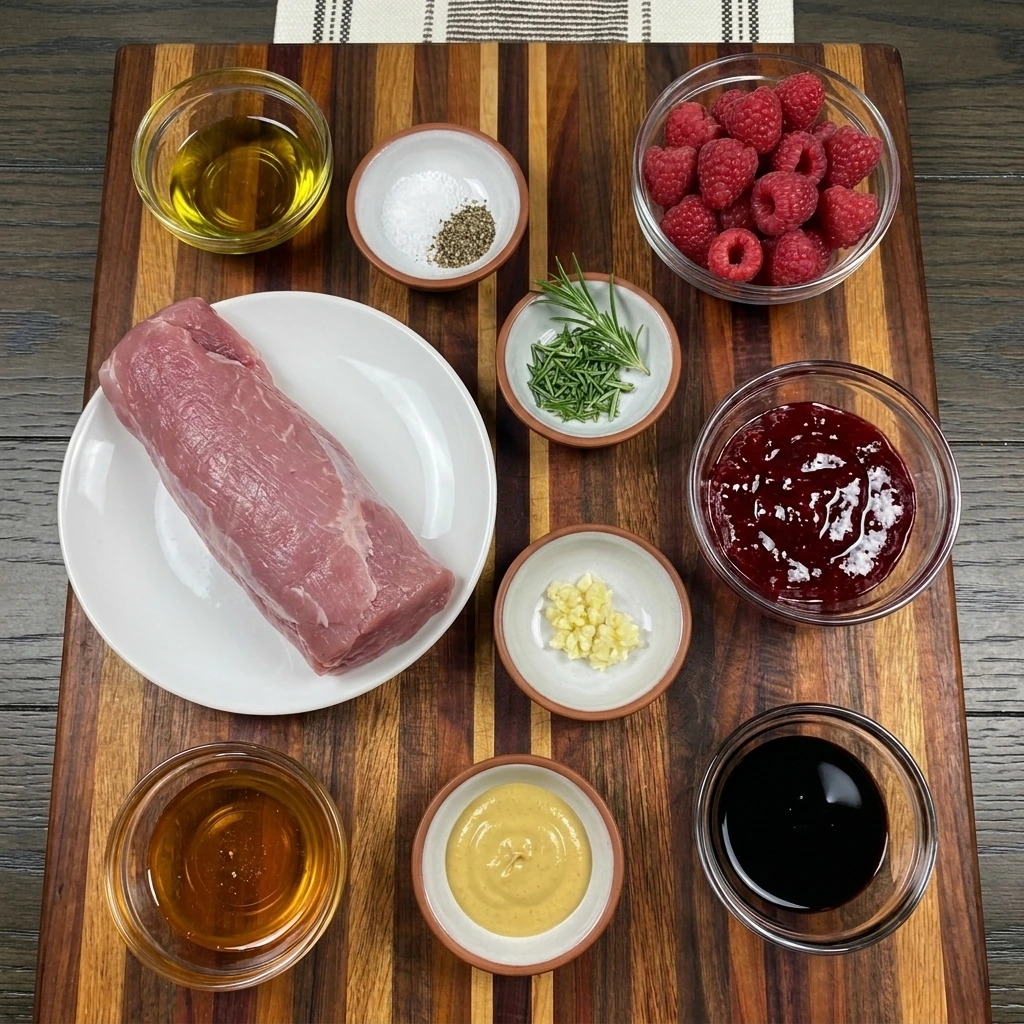
Here is what I use for this recipe and you can adjust nuts or spices based on preference:
- Pork tenderloin: Lean pork that cooks tender and gives the glaze a mild savory base.
- Fresh raspberries: Bright fruit that breaks down into a sweet tart glaze with natural color.
- Seedless raspberry jam: Adds body and sweetness so the glaze turns glossy and thick.
- Balsamic vinegar: Balances the berries with tang and helps deepen the glaze flavor.
- Dijon mustard: Adds gentle sharpness and helps the glaze cling to the pork.
- Honey: Rounds out the tart raspberries and supports light caramelization.
- Garlic: Adds savory depth so the glaze does not taste overly sweet.
- Olive oil: Helps the pork brown in the skillet and keeps the surface moist.
- Kosher salt: Seasons the pork evenly and brings out the natural juices.
- Black pepper: Adds mild warmth that balances the sweet raspberry glaze.
- Fresh rosemary: Adds a woodsy note that pairs with pork and berry glaze.
Tools You’ll Need
- Cast iron skillet: Sears the pork and creates browned edges before roasting.
- Saucepan: Cooks the raspberries into a thick glossy glaze.
- Tongs: Turns the pork safely while keeping the browned crust intact.
- Meat thermometer: Checks doneness so the pork stays juicy and safe.
- Cutting board: Gives a stable place to rest and slice the cooked pork.
- Sharp knife: Cuts the tenderloin into clean thick slices for serving.
- Pastry brush: Spreads the raspberry glaze over the pork in even strokes.
Instructions
Step 1: Season the pork tenderloin

The raw pork tenderloin changes from plain and pale to evenly seasoned with salt and pepper and chopped rosemary scattered across the surface. The seasoning sits unevenly on the meat with some darker pepper spots and green rosemary pieces clinging to the edges.
Tip: Pat the pork dry before seasoning so the outside browns better and the glaze does not slide off later.
Step 2: Sear the pork until browned

The seasoned pork tenderloin moves into a cast iron skillet and changes from raw pink to browned on the outside with darker caramelized patches. The pork is not perfectly centered and one side shows deeper color while the ends stay slightly lighter.
Tip: Turn the pork only when the first side releases easily so the browned crust stays attached.
Step 3: Simmer the raspberry glaze

The raspberries and jam and vinegar and mustard and honey and garlic change into a bubbling deep red sauce with broken fruit and glossy streaks. The mixture looks partly smooth and partly chunky with seeds and softened berry pieces spread unevenly through the saucepan.
Tip: Mash only part of the berries so the glaze keeps a homemade texture with little fruit pieces.
Step 4: Brush the pork with glaze

The browned pork tenderloin gets coated with the raspberry glaze and changes from dry seared meat to glossy red brushed pork with sauce collecting along one side. The glaze sits thicker in some spots and thinner in others so the browned crust still peeks through.
Tip: Leave some browned pork visible under the glaze so the final slices show both color and texture.
Step 5: Roast until the glaze darkens

The glazed pork tenderloin changes into a fully cooked roast with deeper red glaze and browned edges and small sticky caramelized spots. The sauce looks thicker now and the pork has shifted slightly with juices gathering around the lower edge.
Tip: Let the pork rest before slicing so the juices stay inside and the glaze settles on the crust.
Step 6: Slice and serve the pork

The rested pork tenderloin is sliced into thick uneven pieces and moved onto a white plate so the juicy pale center and browned glazed edges show clearly. Extra raspberry glaze drips over a few slices with softened berry pieces scattered naturally on top.
Tip: Slice the pork slightly thick so every serving shows a juicy center and enough glazed edge.
Pro Tips
- Use a meat thermometer and pull the pork when it reaches 145°F so it stays juicy after resting.
- Do not boil the glaze too hard because gentle simmering keeps the raspberry flavor fresh and bright.
- Brush the glaze after searing so the sugars do not burn before the pork is browned.
- Rest the pork before slicing because the juices need time to settle into the tender meat.
Storage Instructions
Store leftover pork slices in an airtight container once fully cooled. Keep extra raspberry glaze in a separate small container if possible so the meat texture stays better. Refrigerate leftovers for up to 3 days. Reheat gently with a spoonful of glaze so the pork does not dry out. For meal prep slice the pork after resting and portion it with rice or vegetables. Add glaze just before serving for the best texture. Freezing works best when the pork is wrapped tightly without too much sauce. Thaw overnight in the refrigerator before reheating.
Frequently Asked Questions
Yes make the glaze early and sear the pork before dinner then roast and slice fresh.
Mashed potatoes green beans rice bowls or roasted squash all pair well with the sweet tangy glaze.
Use a thermometer and rest the pork before slicing so the juices stay inside each piece.
Yes thaw them first and simmer a little longer so extra liquid cooks down into a glossy sauce.
See You in the Kitchen
I hope you try this Raspberry Glazed Pork Tenderloin soon!
It is a simple recipe that looks beautiful and tastes incredible and makes every occasion a little more special with cozy sides like Tomato Basil Soup or Patty Pan Squash Casserole.
Do not forget to share your results or save this recipe for later it is one worth keeping.
Print
Raspberry Glazed Pork Tenderloin
- Total Time: 45 minutes
- Yield: 4 servings
Description
This easy Raspberry Glazed Pork Tenderloin is a quick and simple dinner with the best sweet tangy glaze and a healthy balance of lean pork and bright berry flavor. It is full of ideas for weeknight dinner and meal prep yet pretty enough for a holiday or party. The pork roasts until juicy and lightly browned then gets brushed with glossy raspberry sauce for a family meal that feels special without extra work.
Ingredients
- 1 1/2 pounds Pork tenderloin
- 1 1/2 cups Fresh raspberries
- 1/3 cup Seedless raspberry jam
- 2 tablespoons Balsamic vinegar
- 1 tablespoon Dijon mustard
- 1 tablespoon Honey
- 2 cloves minced Garlic
- 1 tablespoon Olive oil
- 1 teaspoon Kosher salt
- 1/2 teaspoon Black pepper
- 1 teaspoon chopped plus 1 small sprig for garnish Fresh rosemary
Instructions
- The raw pork tenderloin changes from plain and pale to evenly seasoned with salt and pepper and chopped rosemary scattered across the surface. The seasoning sits unevenly on the meat with some darker pepper spots and green rosemary pieces clinging to the edges.
- The seasoned pork tenderloin moves into a cast iron skillet and changes from raw pink to browned on the outside with darker caramelized patches. The pork is not perfectly centered and one side shows deeper color while the ends stay slightly lighter.
- The raspberries and jam and vinegar and mustard and honey and garlic change into a bubbling deep red sauce with broken fruit and glossy streaks. The mixture looks partly smooth and partly chunky with seeds and softened berry pieces spread unevenly through the saucepan.
- The browned pork tenderloin gets coated with the raspberry glaze and changes from dry seared meat to glossy red brushed pork with sauce collecting along one side. The glaze sits thicker in some spots and thinner in others so the browned crust still peeks through.
- The glazed pork tenderloin changes into a fully cooked roast with deeper red glaze and browned edges and small sticky caramelized spots. The sauce looks thicker now and the pork has shifted slightly with juices gathering around the lower edge.
- The rested pork tenderloin is sliced into thick uneven pieces and moved onto a white plate so the juicy pale center and browned glazed edges show clearly. Extra raspberry glaze drips over a few slices with softened berry pieces scattered naturally on top.
Notes
Pro Tips:
- Use a meat thermometer and pull the pork when it reaches 145°F so it stays juicy after resting.
- Do not boil the glaze too hard because gentle simmering keeps the raspberry flavor fresh and bright.
- Brush the glaze after searing so the sugars do not burn before the pork is browned.
- Rest the pork before slicing because the juices need time to settle into the tender meat.
Storage: Store leftover pork slices in an airtight container once fully cooled. Keep extra raspberry glaze in a separate small container if possible so the meat texture stays better. Refrigerate leftovers for up to 3 days. Reheat gently with a spoonful of glaze so the pork does not dry out. For meal prep slice the pork after resting and portion it with rice or vegetables. Add glaze just before serving for the best texture. Freezing works best when the pork is wrapped tightly without too much sauce. Thaw overnight in the refrigerator before reheating.
- Prep Time: 15 minutes
- Cook Time: 30 minutes
- Category: Dinner
- Cuisine: American