

You guys! When my mom tasted this recipe she said…” I think that’s one of the best things you’ve ever done”! I have to say that it’s one of my top five favorites! A Saturday evening experiment turned into the best Oven-Roasted Beef Tenderloin ever! It has the same tender texture and rich flavor as a steakhouse beef tenderloin but it’s made with simple ingredients and a homemade garlic herb butter coating that gives every slice so much flavor.
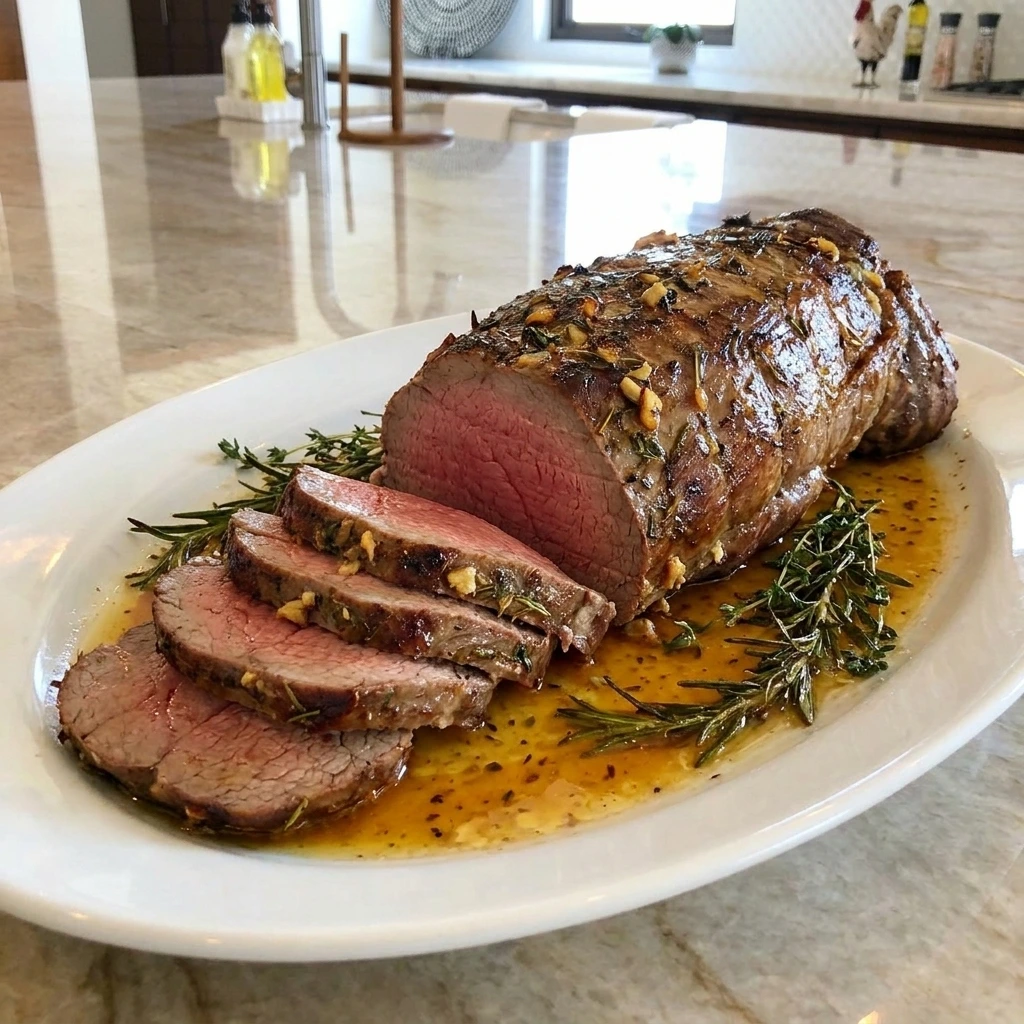
This beef tenderloin is seasoned with fresh rosemary and thyme along with garlic and softened butter. I think you all know I’m a comfort food lover and I already made Slow Cooker Cranberry Meatballs and so many hearty dinners before but I rarely love a recipe that feels this fancy while being so simple to make! The recipe makes 4 servings and I typically like to make things in smaller batches since I do so much cooking but if you have a bigger group or want to make more then you can double the recipe and prepare a larger roast!
This Oven-Roasted Beef Tenderloin can be the centerpiece of a Christmas dinner or you can pair it with roasted vegetables and creamy mashed potatoes for a tasty family meal. It’s also great for meal prep because you can slice the leftover beef and store it in the refrigerator for easy lunches or dinners during the week!
Ingredients
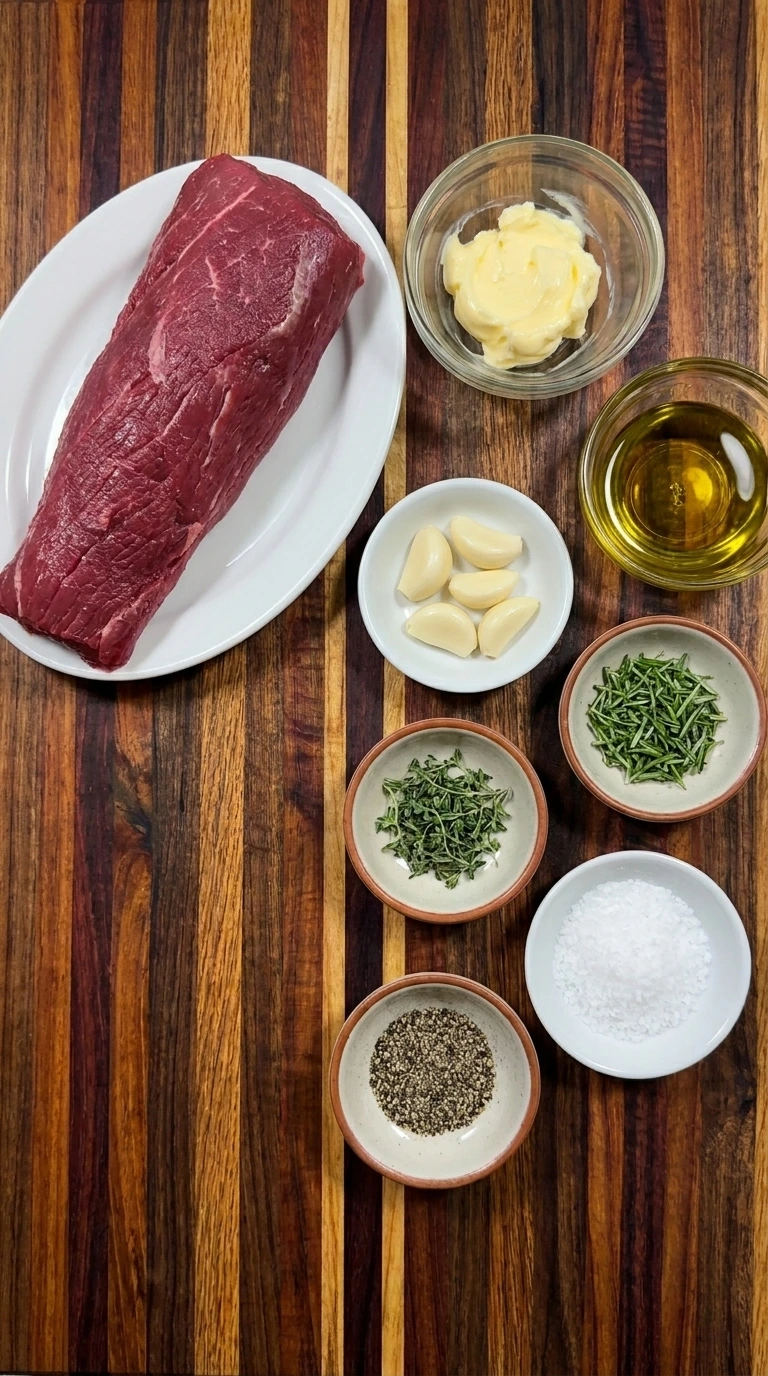
Here is what I use for this recipe :
- Center-cut beef tenderloin roast: A trimmed center-cut beef tenderloin provides an evenly shaped roast with naturally tender meat and a delicate beef flavor. Choose a roast with the silver skin removed for the best texture and even cooking.
- Unsalted butter: Softened butter combines with garlic and fresh herbs to create a rich coating that melts over the beef during roasting and helps carry the seasonings across the surface.
- Olive oil: Olive oil helps create a golden seared crust and prevents the surface of the tenderloin from sticking during the initial browning stage.
- Fresh garlic: Fresh garlic provides a savory flavor that blends into the herb butter and becomes fragrant as the beef roasts.
- Fresh rosemary: Fresh rosemary contributes an aromatic and slightly piney flavor that complements the richness of the beef and creates visible green flecks in the butter coating.
- Fresh thyme leaves: Fresh thyme adds a gentle earthy flavor and provides small herb leaves that distribute naturally across the seasoned beef.
- Kosher salt: Kosher salt seasons the tenderloin throughout its outer surface and helps the natural flavor of the meat stand out.
- Freshly ground black pepper: Black pepper adds a mild spicy warmth and contributes dark speckles to the browned crust of the finished roast.
Tools I Use :
- Large oven-safe cast iron skillet: Provides strong direct heat for searing the tenderloin and transfers safely into the oven for roasting without moving the meat into another cooking vessel.
- Oven: Supplies consistent high heat to roast the beef evenly and develop a browned herb crust while the center reaches the desired temperature.
- Wooden cutting board: Provides a stable preparation area for tying and seasoning the raw beef and a separate clean surface for resting and slicing the finished roast.
- Small mixing bowl: Holds the softened butter with garlic and fresh herbs while the ingredients are combined into a spreadable coating.
- Kitchen twine: Secures the tenderloin into an even cylindrical shape so thinner sections do not cook much faster than the center.
- Kitchen tongs: Allow the beef to be rotated carefully during searing while protecting the surface from unnecessary piercing.
- Instant-read meat thermometer: Measures the internal temperature of the thickest section of beef and helps prevent overcooking.
- Sharp chef’s knife: Mincing garlic and chopping fresh herbs and slicing the cooked tenderloin into clean portions.
- Measuring spoons: Measure the seasonings and chopped herbs accurately so the flavor remains balanced.
- Small spoon or spatula: Combines the garlic herb butter and helps spread the mixture evenly over the warm seared beef.
- Aluminum foil: Loosely covers the roasted beef during resting to help retain warmth without trapping excessive moisture against the crust.
- White serving plate: Holds a finished individual portion while displaying the tender pink interior and browned outer crust.
Instructions
Step 1: Tie and season the beef tenderloin
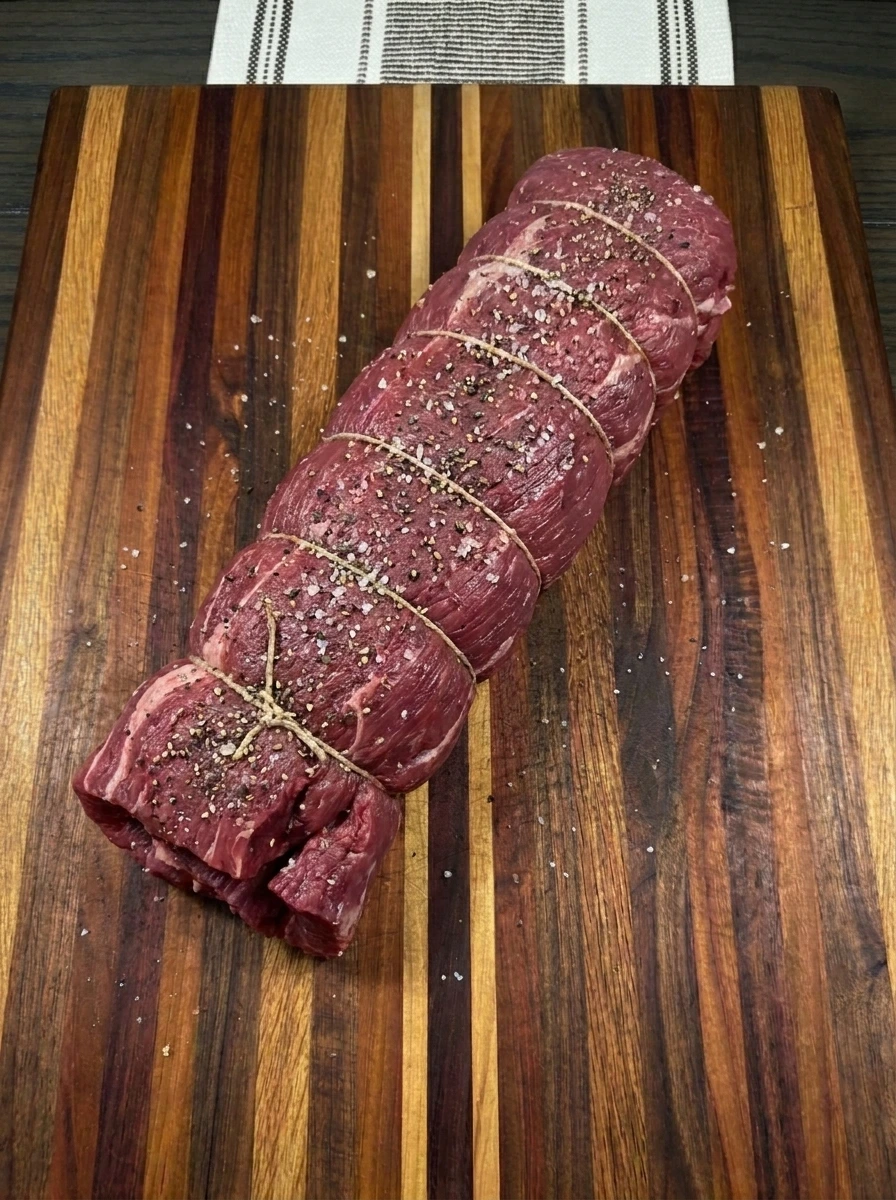
Start with a 2-pound trimmed center-cut beef tenderloin and pat it thoroughly dry. If the roast has a thin tapered end then fold that end underneath to create a more even thickness. Secure the beef with kitchen twine at roughly 2-inch intervals so it holds its shape while cooking. Place the tied roast on a wooden cutting board and season the entire surface with kosher salt and freshly ground black pepper. Rotate the roast as you season so the top and sides receive an even amount. Let it stand for about 15 minutes while you prepare the herb butter and preheat the oven to 425°F.
Tip: Drying the beef thoroughly helps create a better crust while tying the roast keeps thinner sections from cooking too quickly.
Step 2: Mix the garlic and herb butter
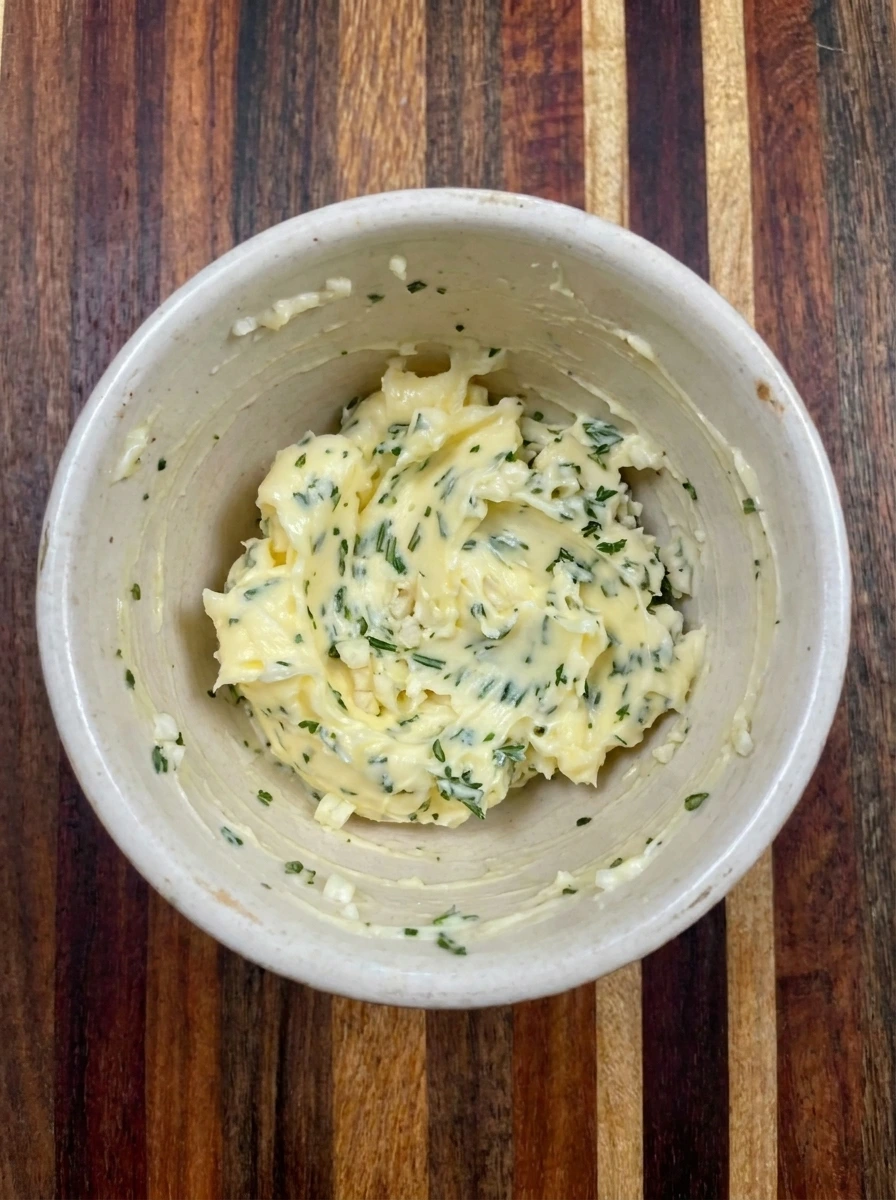
Place the softened unsalted butter in a small mixing bowl and add the minced garlic along with the chopped rosemary and fresh thyme leaves. Stir until the herbs and garlic are distributed throughout the butter. The finished mixture should look creamy and slightly uneven with visible pieces of garlic and green herb flecks. Keep the herb butter ready for the roast after the beef has been seared so the fresh garlic does not burn during the initial high-heat browning.
Tip: Use softened butter rather than melted butter so the herb mixture holds together and spreads easily over the warm beef.
Step 3: Sear the tenderloin until golden brown
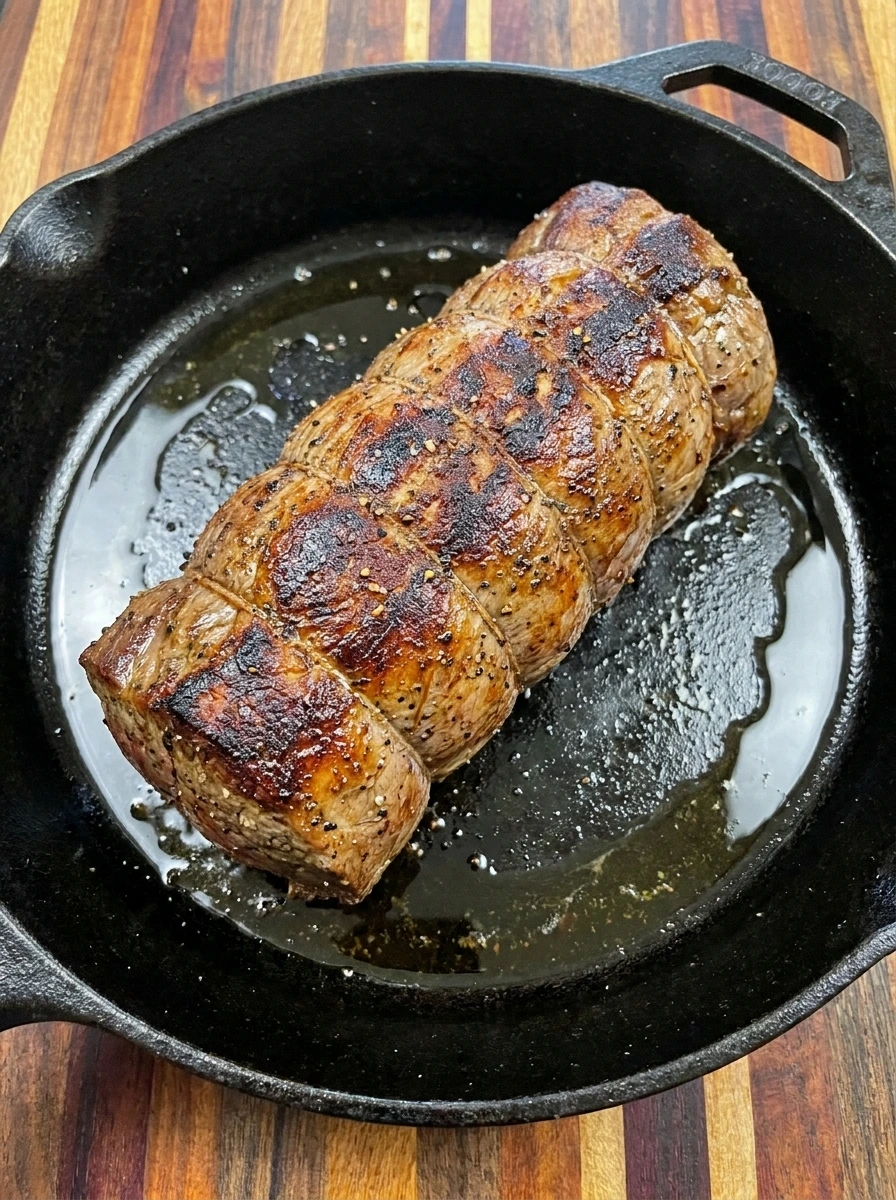
Heat the olive oil in a large oven-safe cast iron skillet over medium-high heat. Once the oil is hot then carefully place the seasoned tenderloin in the skillet. Sear the beef for about 2 minutes on each broad side and continue rotating until the exposed surfaces develop a golden-brown crust. The total searing time is approximately 6 to 8 minutes. The exterior should change from bright red to a rich brown color with some darker caramelized patches while the center remains uncooked. Remove the skillet from the heat and allow the surface to cool slightly before adding the herb butter.
Tip: Give each side enough time to develop a brown crust before turning and use a splatter guard if the hot oil begins to spit.
Step 4: Coat the seared tenderloin with herb butter
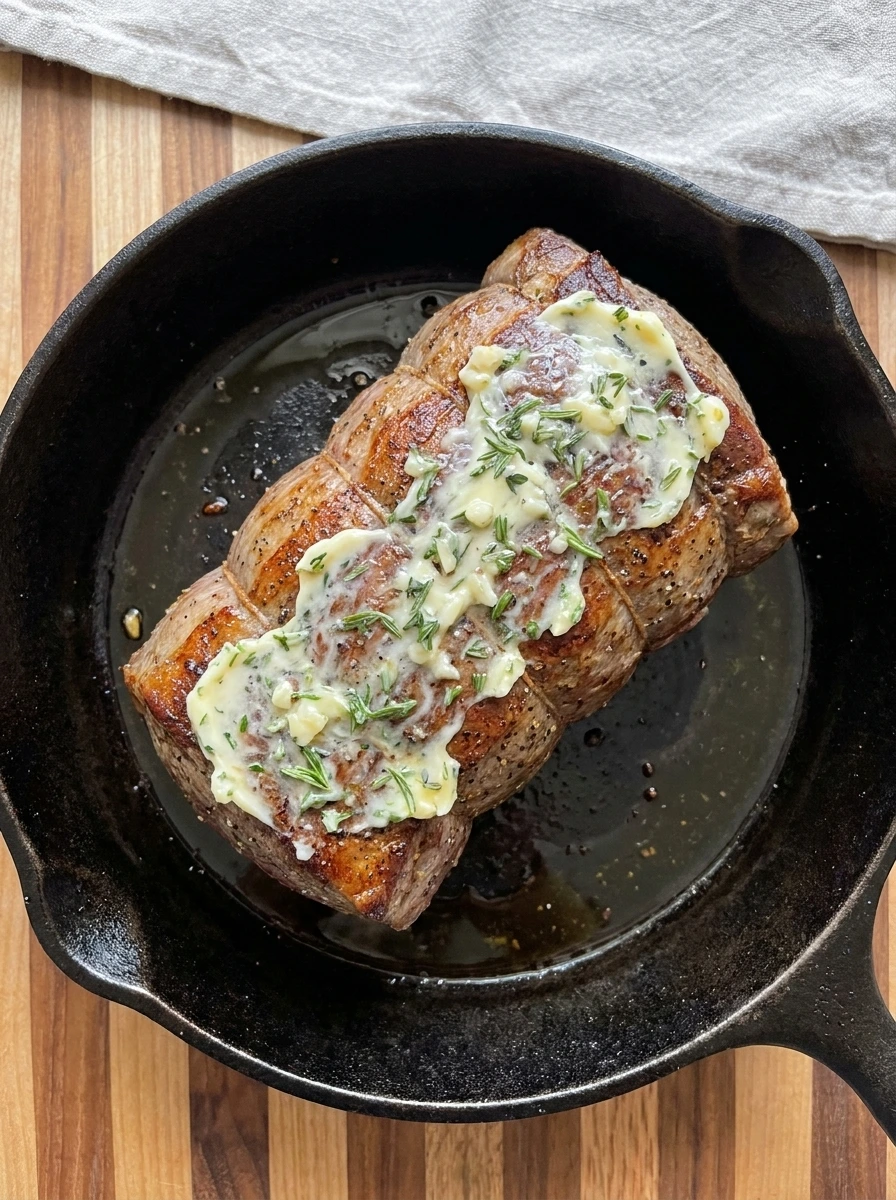
Spread the prepared garlic herb butter across the top and sides of the seared tenderloin. Use all of the butter mixture and distribute it in small uneven patches so some of the golden crust remains visible beneath the coating. The butter will begin softening against the warm beef while the minced garlic and fresh herbs settle into the browned surface. Keep the tenderloin in the oven-safe skillet and position it toward the center so it is ready to roast.
Tip: Applying the garlic butter after searing protects the fresh garlic from burning and keeps the herb flavor more pronounced.
Step 5: Roast the tenderloin until the crust is browned
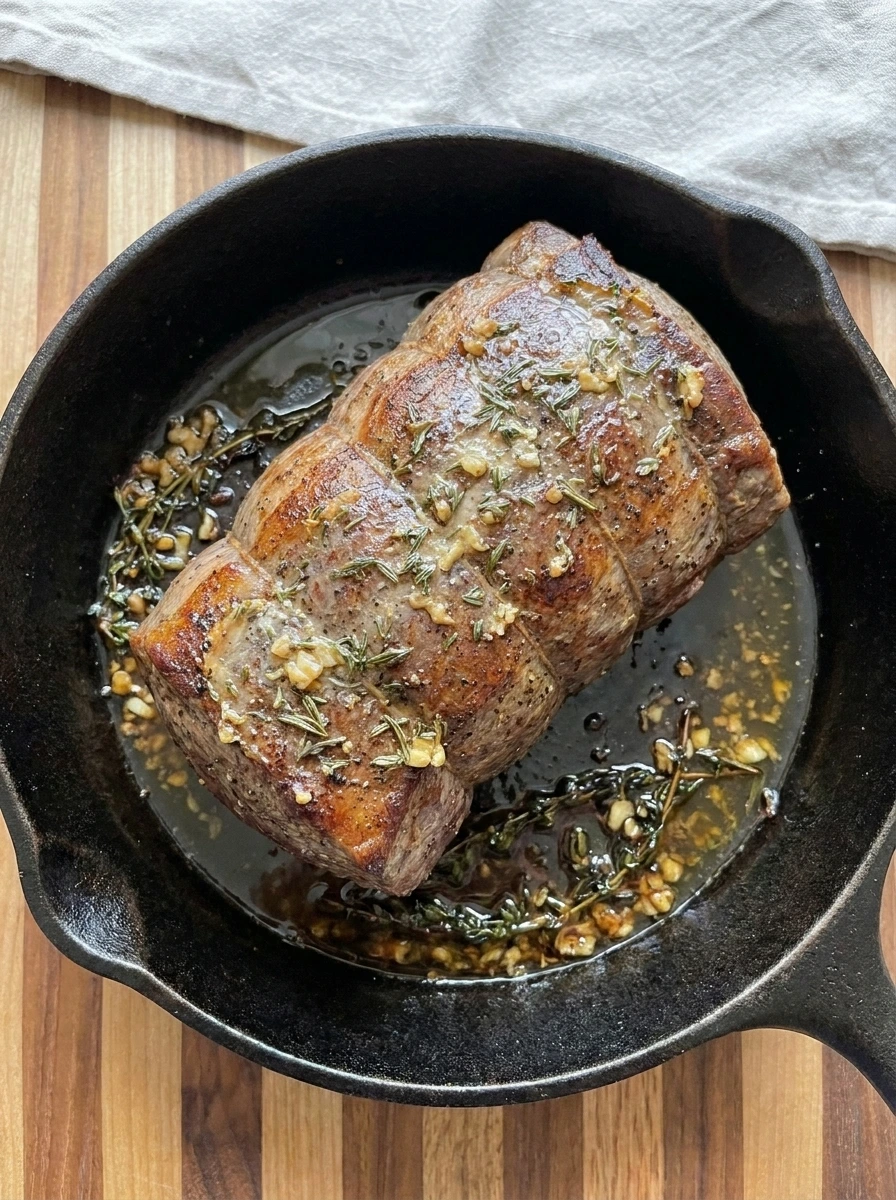
Transfer the oven-safe skillet with the butter-coated tenderloin into the preheated 425°F oven. Roast for approximately 15 to 22 minutes while checking the internal temperature with an instant-read thermometer inserted into the thickest part. For medium-rare beef remove the roast when the center reaches approximately 125°F to 130°F and allow for carryover cooking during the resting period. During roasting the herb butter melts and mixes with the natural juices while the garlic and rosemary settle into the crust. The outside becomes darker golden brown with uneven caramelized areas and the tenderloin develops a rich roasted appearance. Cooking time varies with the thickness and starting temperature of the meat.
Tip: Start checking the temperature early because tenderloin is lean and a few extra minutes can noticeably change the doneness.
Step 6: Rest and slice the roasted beef tenderloin
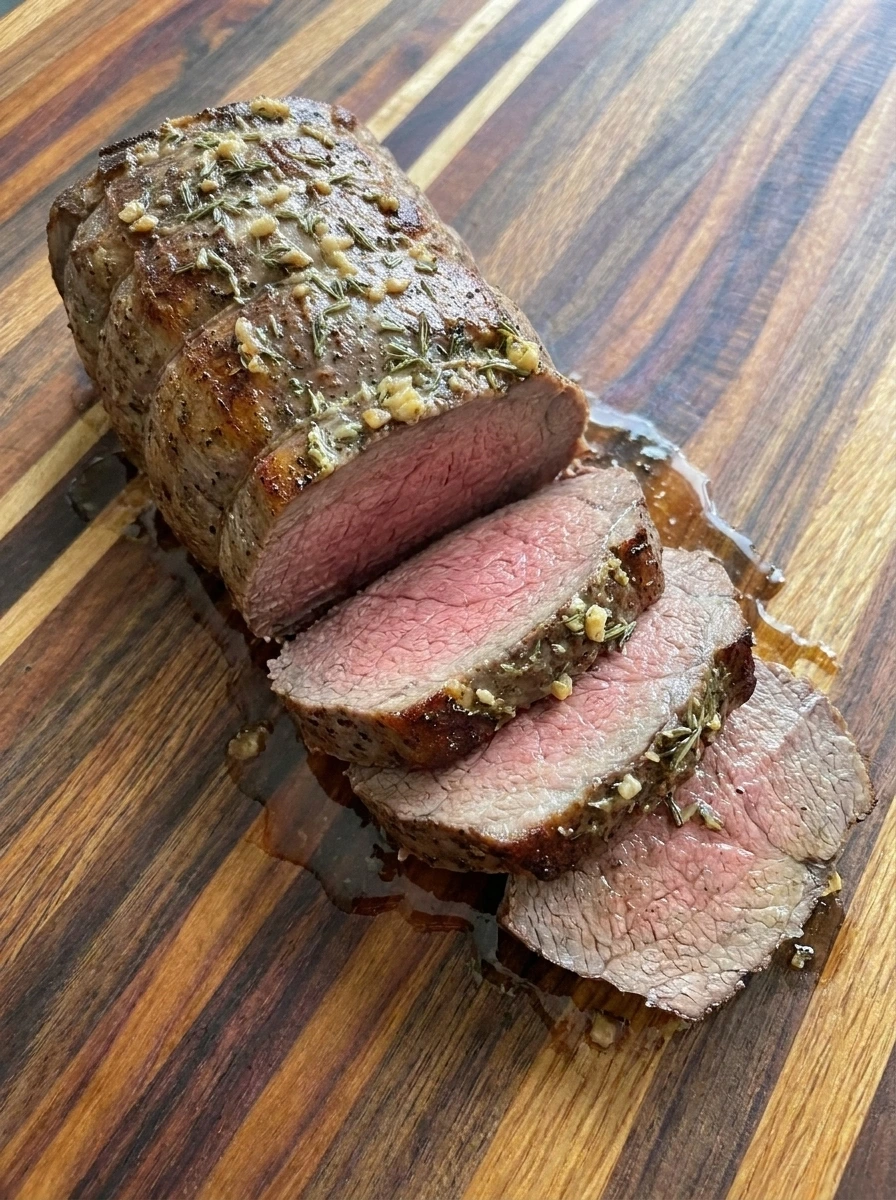
Transfer the finished tenderloin from the skillet to a clean wooden cutting board and let it rest loosely covered for 10 to 15 minutes. Resting gives the meat time to settle after roasting and helps retain its juices when sliced. Remove the kitchen twine once the resting period is complete. Cut the tenderloin across the grain into approximately 1-inch-thick slices. The slices should reveal tender rosy-pink centers with thin browned outer edges. Keep several slices close to the remaining roast and allow the natural juices to collect lightly around the cut pieces.
Tip: Rest the entire roast before slicing and use a sharp knife to create clean cuts without pressing the juices out of the meat.
Step 7: Plate a juicy slice with herb butter juices
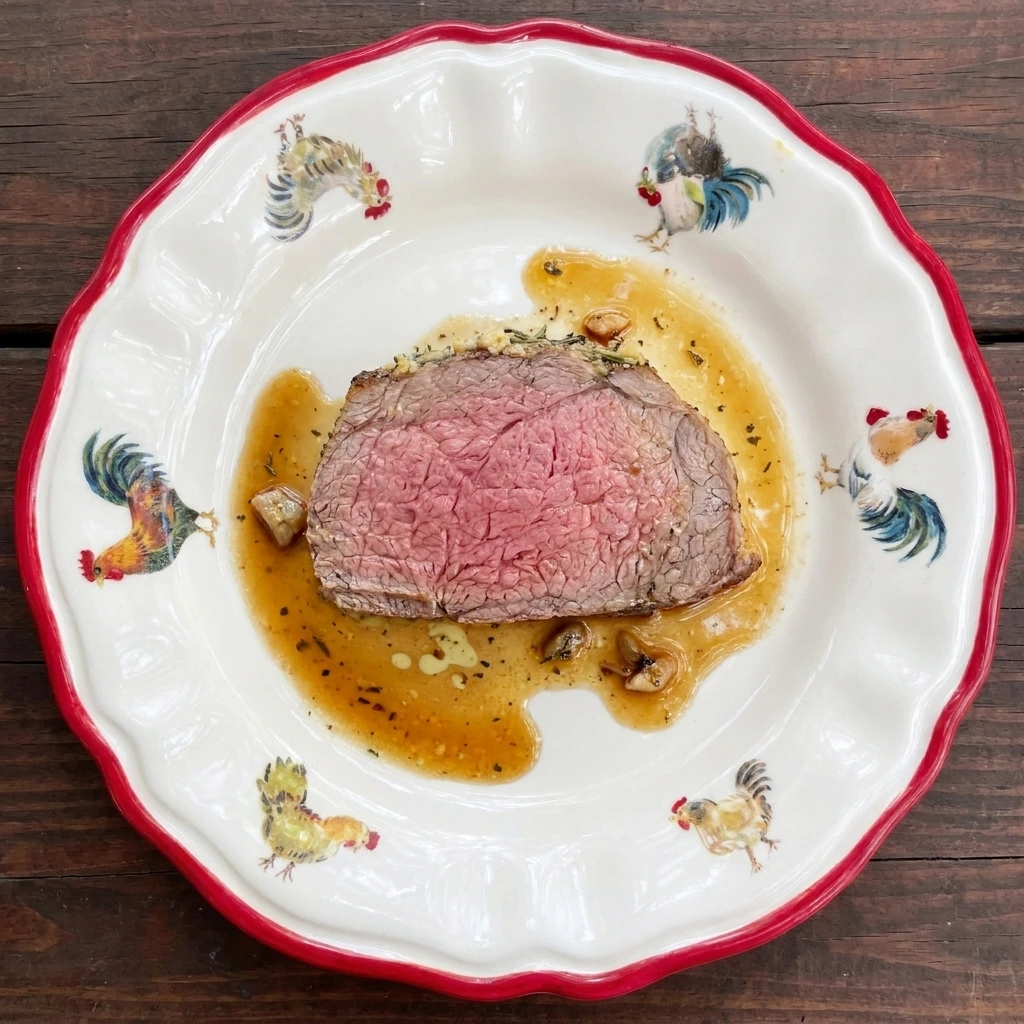
Place one thick slice of roasted beef tenderloin onto a white serving plate with its rosy-pink center facing upward. Add a small spoonful of the warm roasting juices around the base and finish with a few thyme leaves or rosemary pieces from the cooked herb coating. The final portion should have a tender pink center and a slightly uneven golden-brown outer crust. Serve immediately while the meat is warm and pair it with your favorite potatoes or vegetables if you want to create a complete dinner.
Tip: Serve the beef with just a little of its natural roasting juices so the tender crust remains visible and the slices stay juicy.
Pro Tips
- Choose a center-cut tenderloin with an even thickness and tie any thinner sections underneath so the roast cooks consistently.
- Pat the beef completely dry before seasoning because excess moisture prevents the outside from developing a deeply browned crust.
- Check the thickest part with an instant-read thermometer and remove the roast before the target final temperature to allow for carryover cooking.
- Let the roasted beef rest for at least 10 minutes before slicing so the meat retains more of its natural juices and stays tender.
Storage Instructions
Refrigerator Storage: Allow the cooked beef tenderloin to cool slightly before storing it in a shallow airtight container. Refrigerate within 2 hours of cooking and keep at 40°F or below. Properly stored leftovers can be enjoyed within 3 to 4 days. Keep the slices together when possible to reduce the amount of exposed meat and help preserve their moisture. Freezer Storage: For longer storage wrap the cooled tenderloin tightly in freezer-safe wrapping and place it inside an airtight freezer container or bag.
Freeze individual portions if you want to use the beef for quick lunches or easy weeknight meals. For the best flavor and texture use the frozen meat within 2 to 3 months although food kept continuously frozen at 0°F remains safe longer. Reheating: Place leftover slices in a covered oven-safe dish with a small spoonful of beef broth or reserved roasting juices. Warm gently in a low oven around 275°F until heated through and reach 165°F for food safety.
Gentle reheating helps reduce additional moisture loss although the meat may become more cooked than its original medium-rare state. Meal Prep: Keep sliced beef in individual airtight containers and pair it with separately stored vegetables or potatoes. Cold leftover beef is also delicious in sandwiches or salads when it has been properly refrigerated. Avoid repeatedly reheating the same portions because this can dry out the tenderloin and reduce its tenderness.
Frequently Asked Questions
For medium-rare beef aim for a final temperature around 130°F to 135°F after resting and allow for carryover cooking.
A 2-pound center-cut roast generally needs about 15 to 22 minutes in a 425°F oven after searing depending on thickness.
You can trim and tie the beef in advance and prepare the garlic herb butter separately before cooking.
Avoid overcooking by checking the internal temperature and always rest the roast before slicing across the grain.
See You in the Kitchen
I hope you enjoy all the recipes I share with you including this delicious Oven-Roasted Beef Tenderloin recipe and my favorite holiday appetizers like Cranberry Brie Pull-Apart Bread and Boursin Cheese Dip.
I hope you try it and enjoy it and rate it and share it with your friends and family!
Print
Oven-Roasted Beef Tenderloin
- Total Time: 65 minutes
- Yield: 4 servings
Description
This Oven-Roasted Beef Tenderloin is one of the best ideas for a special dinner without spending hours in the kitchen. A simple garlic and herb butter coating gives the beef a rich flavor while a quick sear and easy oven roasting create a beautiful golden crust with a juicy center. It is a naturally low-carb and healthy option for Christmas dinner or a holiday party. Serve tender slices with your favorite vegetables for an impressive meal that feels special yet remains easy to prepare.
Ingredients
- 2 pounds Center-cut beef tenderloin roast
- 3 tablespoons Unsalted butter
- 1 tablespoon Olive oil
- 4 cloves minced Fresh garlic
- 2 teaspoons finely chopped Fresh rosemary
- 2 teaspoons Fresh thyme leaves
- 1 and 1/2 teaspoons Kosher salt
- 1 teaspoon Freshly ground black pepper
Instructions
- Start with a 2-pound trimmed center-cut beef tenderloin and pat it thoroughly dry. If the roast has a thin tapered end then fold that end underneath to create a more even thickness. Secure the beef with kitchen twine at roughly 2-inch intervals so it holds its shape while cooking.
Place the tied roast on a wooden cutting board and season the entire surface with kosher salt and freshly ground black pepper. Rotate the roast as you season so the top and sides receive an even amount. Let it stand for about 15 minutes while you prepare the herb butter and preheat the oven to 425°F.
- Place the softened unsalted butter in a small mixing bowl and add the minced garlic along with the chopped rosemary and fresh thyme leaves. Stir until the herbs and garlic are distributed throughout the butter.
The finished mixture should look creamy and slightly uneven with visible pieces of garlic and green herb flecks. Keep the herb butter ready for the roast after the beef has been seared so the fresh garlic does not burn during the initial high-heat browning.
- Heat the olive oil in a large oven-safe cast iron skillet over medium-high heat. Once the oil is hot then carefully place the seasoned tenderloin in the skillet. Sear the beef for about 2 minutes on each broad side and continue rotating until the exposed surfaces develop a golden-brown crust. The total searing time is approximately 6 to 8 minutes.
The exterior should change from bright red to a rich brown color with some darker caramelized patches while the center remains uncooked. Remove the skillet from the heat and allow the surface to cool slightly before adding the herb butter.
- Spread the prepared garlic herb butter across the top and sides of the seared tenderloin. Use all of the butter mixture and distribute it in small uneven patches so some of the golden crust remains visible beneath the coating.
The butter will begin softening against the warm beef while the minced garlic and fresh herbs settle into the browned surface. Keep the tenderloin in the oven-safe skillet and position it toward the center so it is ready to roast.
- Transfer the oven-safe skillet with the butter-coated tenderloin into the preheated 425°F oven. Roast for approximately 15 to 22 minutes while checking the internal temperature with an instant-read thermometer inserted into the thickest part. For medium-rare beef remove the roast when the center reaches approximately 125°F to 130°F and allow for carryover cooking during the resting period.
During roasting the herb butter melts and mixes with the natural juices while the garlic and rosemary settle into the crust. The outside becomes darker golden brown with uneven caramelized areas and the tenderloin develops a rich roasted appearance. Cooking time varies with the thickness and starting temperature of the meat.
- Transfer the finished tenderloin from the skillet to a clean wooden cutting board and let it rest loosely covered for 10 to 15 minutes. Resting gives the meat time to settle after roasting and helps retain its juices when sliced. Remove the kitchen twine once the resting period is complete.
Cut the tenderloin across the grain into approximately 1-inch-thick slices. The slices should reveal tender rosy-pink centers with thin browned outer edges. Keep several slices close to the remaining roast and allow the natural juices to collect lightly around the cut pieces.
- Place one thick slice of roasted beef tenderloin onto a white serving plate with its rosy-pink center facing upward. Add a small spoonful of the warm roasting juices around the base and finish with a few thyme leaves or rosemary pieces from the cooked herb coating.
The final portion should have a tender pink center and a slightly uneven golden-brown outer crust. Serve immediately while the meat is warm and pair it with your favorite potatoes or vegetables if you want to create a complete dinner.
Notes
Pro Tips:
- Choose a center-cut tenderloin with an even thickness and tie any thinner sections underneath so the roast cooks consistently.
- Pat the beef completely dry before seasoning because excess moisture prevents the outside from developing a deeply browned crust.
- Check the thickest part with an instant-read thermometer and remove the roast before the target final temperature to allow for carryover cooking.
- Let the roasted beef rest for at least 10 minutes before slicing so the meat retains more of its natural juices and stays tender.
Storage: Refrigerator Storage: Allow the cooked beef tenderloin to cool slightly before storing it in a shallow airtight container. Refrigerate within 2 hours of cooking and keep at 40°F or below. Properly stored leftovers can be enjoyed within 3 to 4 days. Keep the slices together when possible to reduce the amount of exposed meat and help preserve their moisture.
Freezer Storage: For longer storage wrap the cooled tenderloin tightly in freezer-safe wrapping and place it inside an airtight freezer container or bag. Freeze individual portions if you want to use the beef for quick lunches or easy weeknight meals. For the best flavor and texture use the frozen meat within 2 to 3 months although food kept continuously frozen at 0°F remains safe longer.
Reheating: Place leftover slices in a covered oven-safe dish with a small spoonful of beef broth or reserved roasting juices. Warm gently in a low oven around 275°F until heated through and reach 165°F for food safety. Gentle reheating helps reduce additional moisture loss although the meat may become more cooked than its original medium-rare state.
Meal Prep: Keep sliced beef in individual airtight containers and pair it with separately stored vegetables or potatoes. Cold leftover beef is also delicious in sandwiches or salads when it has been properly refrigerated. Avoid repeatedly reheating the same portions because this can dry out the tenderloin and reduce its tenderness.
- Prep Time: 20 minutes
- Cook Time: 30 minutes
- Category: Dinner
- Cuisine: American